원자력공학과, ‘원자력 안전규제라운드테이블’ 개최

연구 2026년 06월 23일 화요일

‘꿈의 태양전지’ 대량 생산 문턱 낮췄다!

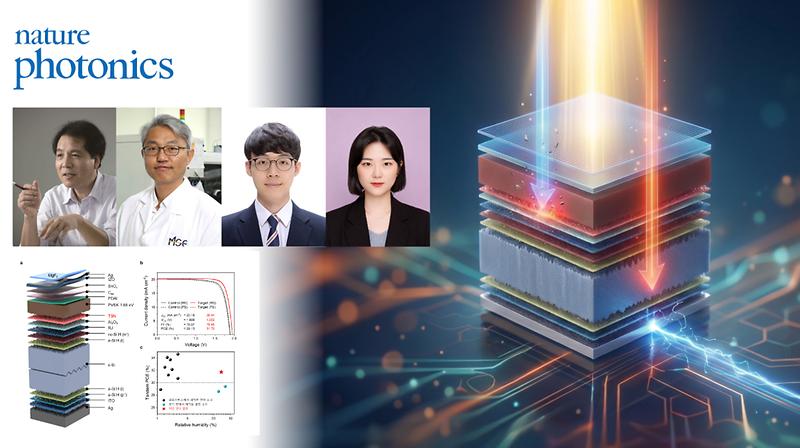
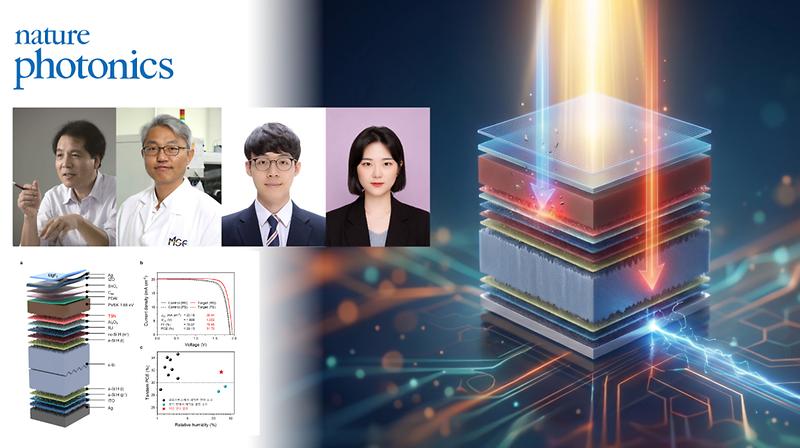
페로브스카이트 태양전지 연구를 선도해온 UNIST 석상일 특훈교수 공동연구팀이 고효율 탠덤 태양전지의 대량생산에 필요한 계면 코팅 물질을 개발했다. 이 물질을 적용하면 수분과 산소에 노출되는 일반 공정을 통해서도 효율 30%가 넘어가는 페로브스카이트·실리콘 탠덤 태양전지를 만들 수 있게 됐다. 고효율 탠덤 전지 대량생산의 문턱을 낮춘 성과라는 평가가 나온다. 이번 연구는 광학·광자공학 분야의 세계적 학술지 네이처 포토닉스(Nature Photonics)에 6월 1일 공개됐다. UNIST 에너지화학공학과 석상일 특훈교수, 신소재공학과 최경진 교수팀은 사우디아라비아 KAUST 연구팀과 함께 3성분 물질을 이용한 전지 계면 코팅 물질을 개발했다고 11일 밝혔다. 페로브스카이트·실리콘 탠덤 태양전지는 페로브스카이트 전지와 실리콘 전지를 위아래로 쌓은 초고효율 전지다. 위쪽 페로브스카이트가 짧은 파장의 태양빛을 먼저 흡수하고, 아래쪽 실리콘이 남은 빛을 흡수해 기존 실리콘 태양전지보다 더 높은 효율을 낼 수 있다. 꿈의 태양전지로 불리며 중국을 비롯한 주요국이 주도권 확보 경쟁에 나선 이유다. 연구팀이 개발한 물질은 페로브스카이트층을 올리기 전, 전극 표면에 먼저 깔리는 얇은 접촉층이다. 이 층이 고르게 붙어 있어야 그 위에 바르는 페로브스카이트 용액도 균일하게 퍼지고, 전기 입자, 즉 전하가 사라지는 결함도 줄어든다. 기존에 쓰던 SAM 코팅층은 공기 중에 수분이 있으면 전극 위에 고르게 붙지 못하고, 페로브스카이트 용액을 바르는 과정에서도 쉽게 흐트러졌다. 고효율 전지는 수분과 산소를 차단한 특수 설비 안에서 만들어야 했고, 이는 대면적 생산 비용을 높이는 요인이 됐다. 연구팀의 3성분 물질은 기존 SAM 물질인 Me-4PACz 외에도 GDMA와 AG가 더 들어 있다. GDMA는 코팅층이 전극 위에 고르게 퍼지고 열처리 뒤 단단히 붙도록 돕고, AG는 페로브스카이트와 맞닿는 부분의 결함을 줄이는 역할을 한다. 결함이 줄어들면 빛을 받아 생긴 전하가 중간에 소실되지 않고, 그만큼 전하가 전극으로 더 잘 이동해 태양전지의 효율과 전압이 높아진다. 이 물질을 적용한 탠덤 전지는 일반 대기 중에서 만들었는데도 31.72%의 효율을 냈다. 이는 대기 중 제조 탠덤 전지 중 세계 최고 효율이다. 공인 인증 효율도 31.36%로 확인됐다. 내구성도 향상됐다. 겉을 감싸는 보호 포장 없이 85도의 뜨거운 공기 중에 600시간을 방치한 뒤에도 처음 성능의 92% 이상을 그대로 유지했으며, 실제 태양광을 모방한 강한 빛을 1,000시간 연속으로 쬔 후에도 90% 이상의 높은 효율을 지켜냈다. 이 물질은 페로브스카이트 전지 단독 제작 시에도 수율을 높일 수 있다. 7×7㎠ 대면적 기판에서도 페로브스카이트 박막이 고르게 만들어졌고, 불량률이 낮아졌다. 이번 연구는 UNIST의 김귀수 연구원, KAUST의 아디 프라세티오(Adi Prasetio) 연구원, UNIST의 노영임 연구원이 공동 제1저자로 참여했으며, UNIST 석상일 특훈교수, 최경진 교수, KAUST 스테판 드 울프(Stefaan De Wolf) 교수가 공동 교신저자로 참여했다. 홍콩중문대 선전캠퍼스, 독일 율리히 연구소 연구진도 함께 참여했다. 최경진 교수는 “정부의 ‘K-문샷 프로젝트’ 목표인 ‘초격차 초고효율 다중접합 태양전지’ 개발과 궤를 같이하는 연구”라며 “차세대 태양광 상용화에 크게 기여할 것으로 기대한다”고 말했다. 석상일 교수는 “고효율 탠덤 태양전지를 상용화하려면 성능뿐 아니라 실제 공정에서의 재현성과 생산 비용까지 함께 해결해야 한다”며 “이번 연구는 수분이 있는 일반 대기 중에서도 균일한 계면 박막과 높은 재현성을 확보할 수 있음을 보인 만큼, 대면적 제조 공정으로 확장하는 데 필요한 기술적 기반이 될 것”이라고 말했다. 이번 연구는 현대자동차, 과학기술정보통신부 한국연구재단(NRF), 기후에너지환경부 한국에너지기술평가원(KETEP) 등의 지원을 받아 이뤄졌다. (끝)

원자력공학과, ‘원자력 안전규제라운드테이블’ 개최

연구 2026년 06월 17일 수요일

수소 생산 촉매 전극, 국수 가락처럼 뽑아낸다!

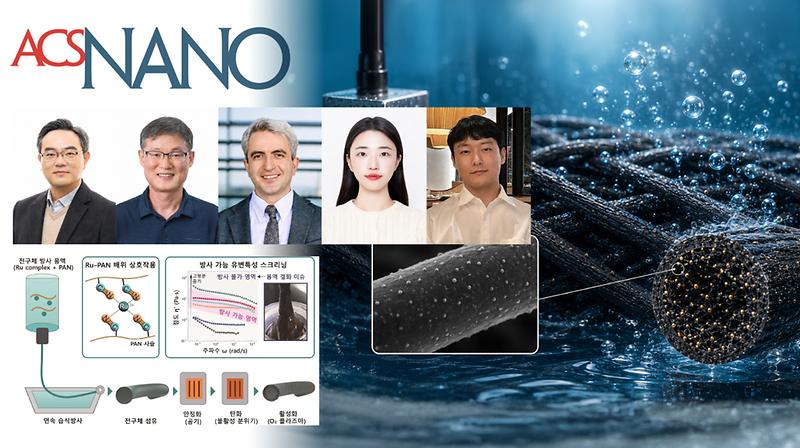
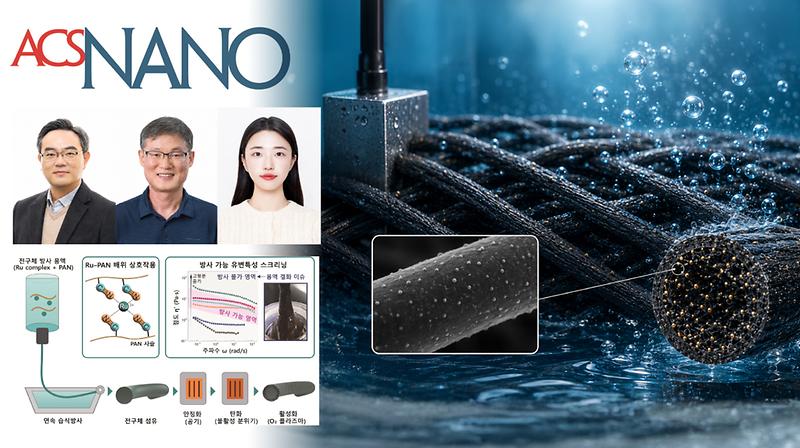
물에서 수소를 생산하는 촉매 전극을 국수 가락 뽑듯 제조하는 기술이 새롭게 개발됐다. 내구성과 반응성이 뛰어난 섬유형 수소 생산 전극을 대량으로 생산할 수 있는 길이 열렸다. UNIST 신소재공학과 채한기 교수팀과 에너지화학공학과 백종범 교수팀은 킹압둘라과학기술대학교(KAUST) 자페르 야부즈(Cafer T. Yavuz) 교수팀과 공동으로 루테늄 촉매를 탄소섬유 안에 균일하게 넣은 섬유형 수소 생산 전극 제조 기술을 개발했다고 7일 밝혔다. 물을 분해해 수소를 얻는 수전해 장치의 전극은 보통 전기가 잘 통하는 기판 위에 촉매를 발라 만든다. 촉매를 바를 때 접착제를 섞게 되는데, 접착제가 촉매 표면을 가려 반응을 방해할 수 있다. 반면 탄소섬유를 얽어서 전극을 만들면 섬유 자체가 전도체 역할을 할 수 있고, 섬유 사이로 물과 전해질도 잘 드나들고, 생성물인 수소도 빠르게 빠져나갈 수 있다. 개발된 기술은 이러한 섬유에 촉매를 쉽게 넣어 전극을 대량 생산할 수 있는 기술이다. 섬유를 먼저 만든 뒤 촉매를 따로 입히는 방식이 아니라 촉매를 섬유 원료에 넣어 함께 뽑아내는 방식이다. 탄소섬유 원료인 고분자 용액과 루테늄 촉매 원료를 섞은 되직한 액체를 노즐로 밀어내 실처럼 뽑고, 이를 열처리해 만든다. 루테늄 성분이 이 과정에서 탄소 섬유 안팎에 작은 촉매 입자로 자리 잡게 된다. 관건은 루테늄 성분이 들어간 고분자 용액을 끊기지 않고 섬유로 뽑아내는 일이었다. 탄소섬유 원료 고분자에 금속 성분을 섞으면 쉽게 뭉치거나 용액이 굳어져, 작은 노즐로 길고 균일하게 뽑아내기 어렵다. 연구팀은 탄소섬유 원료 고분자와 루테늄 성분이 서로 적당히 붙도록 조절해, 촉매가 고르게 섞인 상태로 섬유를 뽑을 수 있는 조건을 찾아낼 수 있었다. 연구팀은 섬유 안에 있는 촉매가 표면에 더 드러날 수 있도록 산소 플라즈마 처리를 거쳐 전극을 완성했다. 완성된 전극을 수전해 장치에 적용한 실험 결과, 고전류 환경에서도 내구성이 뛰어났다. 전극은 500 mA cm⁻²의 높은 전류 조건에서 170시간 동안 계속 작동했으며, 수소 기체가 계속 발생하는 동안에도 전극 형태를 유지했다. 또 전극에 입혀진 촉매 자체의 성능을 평가하는 실험에서는 상용 백금 촉매보다 우수한 성능을 보였다. 이번 연구는 UNIST 이가현 박사, KAUST 김석진 연구교수가 제1저자로, UNIST 백인경 연구원이 공동 저자로 참여했다. 연구팀은 “이번 연구는 루테늄 촉매가 들어간 고분자 용액을 섬유로 뽑아내는 조건을 찾고, 금속 성분이 열처리 과정에서 나노입자로 자리 잡는 과정을 함께 규명했다는 데 의미가 있다”며 “실험실 수준에 머물던 섬유형 촉매 전극 제조를 대규모 롤투롤 연속 공정으로 확장할 수 있는 기반을 마련했다”고 설명했다. 채한기 교수는 “이번 기술은 금속 촉매를 탄소섬유 안에 균일하게 넣어 전극의 구조적 안정성을 높인 것이 특징”이라며 “수전해 전극뿐 아니라 안정성과 균일한 반응성이 중요한 다양한 촉매 분야로도 확장될 수 있을 것”이라고 말했다. 이번 연구는 과학기술정보통신부와 교육부가 지원하고 한국연구재단이 주관하는 중견연구자 지원사업(개인기초연구), 리더연구자지원사업(창의연구)을 통해 수행되었으며, 연구 성과는 미국화학회(ACS)가 발행하는 나노·소재 분야 최상위 국제 학술지인 '에이씨에스 나노(ACS Nano; Impact Factor: 16.1, Cite Score: 24.2)'에 5월 19일 출판됐다.

원자력공학과, ‘원자력 안전규제라운드테이블’ 개최

연구 2026년 05월 30일 토요일

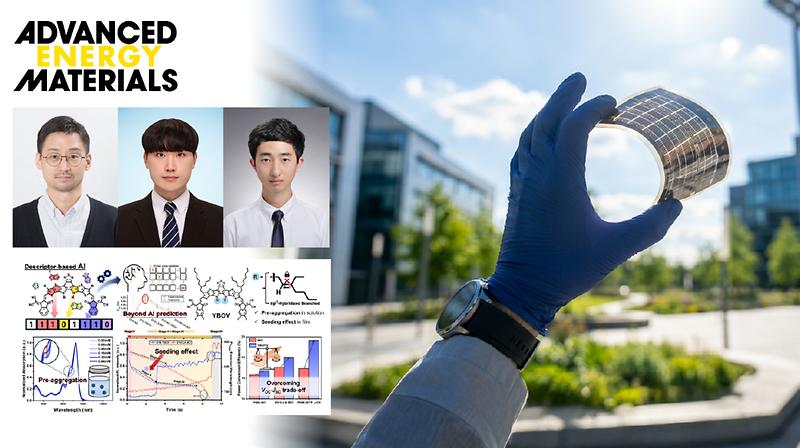
AI 예측 깬 고효율 유기태양전지 개발

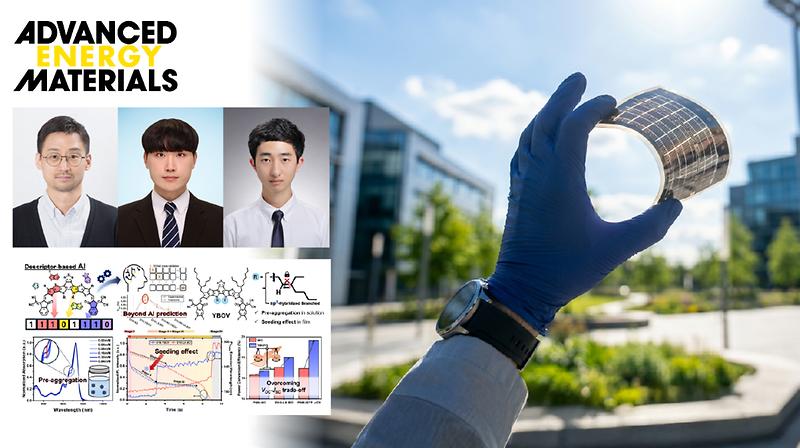
분자 구조에 기반해 성능을 예측하는 인공지능 모델만으로는 설명하기 어려운 고효율 유기태양전지가 개발됐다. AI가 놓친 분자 간의 뭉침이 고성능의 비결이었다. UNIST 에너지화학공학과 양창덕 교수팀은 성균관대학교 고두현 교수팀과 함께 친환경 공정에서도 19.67%의 광전변환효율을 기록한 유기태양전지를 개발했다고 21일 밝혔다. 유기태양전지는 원료를 용매에 녹인 뒤 이를 기판에 코팅하는 방식으로 저렴하고 쉽게 제조할 수 있는 차세대 태양전지다. 가볍고 휘어질 수 있으며, 넓은 면적으로도 만들 수 있어 건물 외벽이나 창문, 웨어러블 기기 등에 적용할 수 있는 전지다. 연구팀은 유기태양전지 원료 분자의 곁가지 구조를 새롭게 설계한 YBOV 분자로 이 같은 고효율 전지를 개발했다. YBOV는 용매에 녹은 상태에서 분자끼리 뭉치게 되는데, 이 뭉침이 박막이 만들어지는 과정에서 결정 성장의 씨앗처럼 작용해 광활성층 박막의 분자 배열을 더 질서 있게 만들어주고 전지 성능이 개선된다. 광활성층은 태양빛을 받아 전하입자를 만드는 물질 층으로 광활성층 결정 배열이 반듯할수록 전지 성능이 좋아진다. 실제 YBOV 분자로 제조한 유기태양전지는 독성 염소 용매가 아닌, 친환경 오쏘자일렌 용매에 분자를 녹여 제조했을 때도 최대 19.67%의 높은 광전변환 효율을 기록했다. 또 YBOV는 다양한 광활성층 원료 조합에서도 뭉침 효과를 발휘해 전지 효율을 높일 수 있다. 유기태양전지의 광활성층은 전자주개 분자와 전자받개 분자로 이뤄지는데, YBOV는 전자받개 분자다. 전자주개 조합을 바꾸거나 별도의 전자받개를 쓰고 YBOV 분자를 첨가제처럼 소량 사용한 경우에도 모두 대조군보다 효율이 올라갔다. 이 같은 분자 간의 뭉침 효과는 유기태양전지의 성능을 예측하는 AI 모델에서는 잡아낼 수 없는 것으로 나타났다. 연구진이 750개의 유기태양전지 데이터를 학습시켜 만든 AI 모델이 유독 YBOV 분자가 들어간 유기태양전지의 개방전압을 낮게 예측한 것이다. AI 모델은 분자 하나의 구조만 보고 예측하기 때문에, 용액 속에서 분자들이 뭉치며 나타나는 복잡한 집단적 물리 현상까지는 계산해내지 못했다는 분석이다. 공동 연구팀은 “이번 연구는 분자 구조 자체뿐 아니라, 용액 상태에서의 집합 거동까지 고려한 새로운 설계 전략을 제시한 것”이라며 “친환경 공정과 결합해 고효율 전지를 만든 만큼 차세대 유기태양전지의 상용화 가능성을 높일 수 있을 것으로 기대된다”고 설명했다. 이번 연구에는 UNIST 정석환, 원동후, 쑨 저(Sun Zhe) 연구원이 공동 제1저자로 참여했다. 연구 결과는 에너지 소재 분야 국제학술지인 어드밴스드 에너지 머터리얼즈(Advanced Energy Materials)에 4월 20일 게재됐으며, 과학기술정보통신부 한국연구재단, 이노코어사업의 지원을 받아 이뤄졌다. (끝)

원자력공학과, ‘원자력 안전규제라운드테이블’ 개최

연구 2026년 05월 22일 금요일

물 한 방울로 껐다 켰다 할 수 있는 발광 소재 개발!

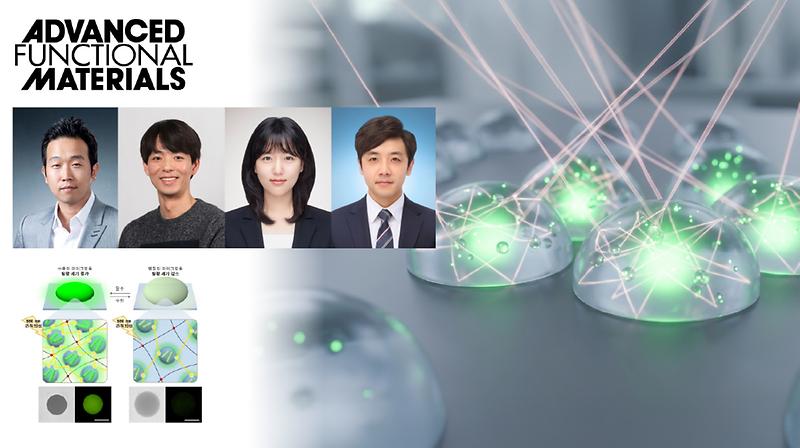
수분을 머금으면 빛이 약해지는 복합 광소재가 개발됐다. 밝게 빛나는 이 광소재 아래 정보를 숨겼다가 물을 떨어뜨려 아래에 숨겨진 정보가 드러나게 하는 보안 기술이나 실시간 습도 감지 웨어러블 센서, 환경 반응형 스마트 디스플레이 등을 만들 수 있을 것으로 기대된다. UNIST 에너지화학공학과 이지석 교수팀과 바이오메디컬공학과 박정훈 교수팀은 건조 상태에서는 수분을 머금은 상태보다 7배 이상 밝은 상향변환 나노입자 기반 소프트 광소재를 개발했다고 20일 밝혔다. 이 소재는 하이드로젤 돔 안에 상향변환 나노입자들이 콕콕 박혀 있는 형태다. 이 상향변환 나노입자에 근적외선을 쬐면 우리가 볼 수 있는 가시광선으로 바뀌어 나온다. 일반적으로 상향변환 나노입자에서 나오는 가시광선은 어둡지만, 개발된 소재는 밝기가 7배 정도 더 밝다. 나노입자들이 기름 방울에 갇혀 있고, 이 기름 방울들이 다시 돔 형태로 굳힌 하이드로젤 안에 가둬진 구조 덕분이다. 이 구조에서는 근적외선이 하이드로젤 돔 안에서 곧장 빠져나가지 못하고, 기름 방울 사이에서 산란되면서 오래 머물게 된다. 그만큼 상향변환 나노입자가 근적외선을 흡수할 기회가 늘어나고, 가시광선 발광도 강해지는 것이다. 반대로 하이드로젤이 수분을 머금으면 빛이 흩어지는 정도가 줄어들고 내부에 머무는 근적외선도 줄어들어 발광이 약해진다. 박정훈 교수팀은 이러한 구조적 근적외선 가둠 효과를 광학 기술 분석 기술을 통해 입증했다. 연구팀은 이 소재로 물이 닿으면 숨겨진 근적외선 정보가 드러나는 암호 기술과 QR 코드 인식 기술을 시연했다. 아래층에는 상향변환 나노입자로 글자, 이모지 등을 만들고, 그 위를 밝게 빛나는 하이드로젤 돔으로 덮었다. 건조 상태에서는 근적외선을 비추어도 돔의 강한 빛에 가려져 아래 글자와 그림이 보이지 않지만, 물을 머금으면 돔의 빛이 약해져 아래층의 이미지가 드러났다. QR 코드 인식 시연은 반대로 건조 상태에서만 QR 코드가 인식된다. 밝게 빛나는 하이드로젤 돔 영역과 상대적으로 어두운 고분자 영역을 조합해 QR 코드를 만들면 건조 상태에서는 근적외선을 비췄을 때 두 영역의 밝기 차이로 QR 코드가 읽히지만, 물을 머금으면 돔의 발광이 약해져 코드가 사라지는 원리다. 개발된 소재는 내구성도 뛰어났다. 물을 머금으면 어두워지고 다시 마르면 밝아지는 과정을 100회 이상 반복해도 밝은 상태의 변화가 4% 미만에 그쳤다. 응답성도 빨라, 물이 닿으면 0.1초 이내에 밝기가 약해지기 시작하고, 수 초 안에 눈에 띄게 어두워진다. 제1저자인 류채영 연구원은 “상향변환 나노입자 자체를 복잡하게 바꾸지 않고도, 하이드로젤 내부에서 빛이 이동하는 길을 설계해 발광을 크게 높인 기술”이라고 설명했다. 이지석 교수는 “나노입자의 발광 색상과 하이드로젤 돔 패턴을 자유롭게 프로그래밍할 수 있고, 제조 공정도 단순해 보안 기술 분야뿐만 아니라 웨어러블 센서나 디스플레이 등 다양한 산업으로 확장할 수 있을 것”이라고 말했다. 이번 연구 결과는 세계적 학술지 어드밴스드 펑셔널 머터리얼즈(Advanced Functional Materials)에 4월 20일 게재됐으며, 과학기술정보통신부 한국연구재단의 지원을 받아 이뤄졌다.

원자력공학과, ‘원자력 안전규제라운드테이블’ 개최

연구 2026년 05월 16일 토요일

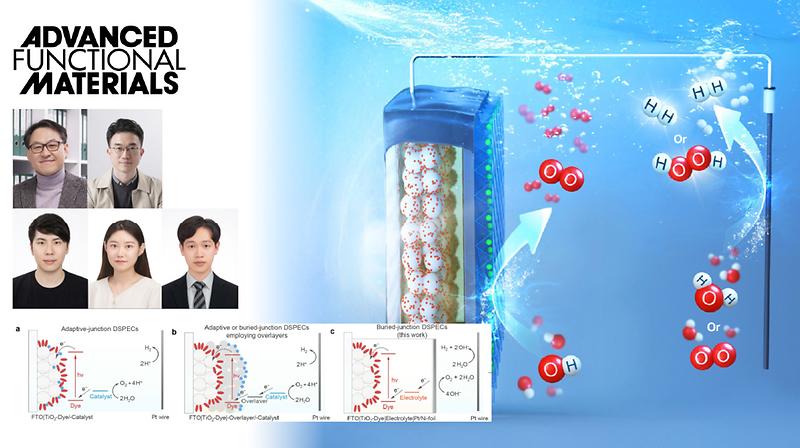
나뭇잎 속 ‘전하 이동 계단’ 닮은 염료감응 인공광합성 전극 개발

식물의 광합성에서는 엽록소가 태양빛을 받아 만든 전하가 내부의 ‘전하전달계’를 타고 유실 없이 포도당과 같은 연료 합성 지점까지 도달할 수 있다. 인공광합성에도 엽록소와 같은 역할을 하는 염료를 이용해 손실 없이 전하를 전달함으로써 외부 전력 없이도 태양광만으로 수소나 과산화수소를 생산할 수 있는 전극이 개발됐다. UNIST 화학과 권태혁 교수와 에너지화학공학과 장지욱 교수팀은 전하 전달 손실을 줄이고, 내구성을 높인 염료감응 인공광합성 전극을 개발했다고 7일 밝혔다. 인공광합성 전극은 햇빛을 받아 물에서 수소, 과산화수소 등을 생산하는 인공광합성의 핵심 부품이다. 그중 염료감응 인공광합성 전극은 유기 염료가 식물 엽록소 역할을 하는 전극으로, 일부 인공광합성 전극과 달리 납과 같은 유해 물질이 없다. 연구팀이 개발한 전극은 이 유기 염료층과 레독스 매개체라는 물질을 니켈 포일로 감싸 매립해 넣은 구조다. 이 구조에서는 빛을 받은 염료에서 생성된 전하가 한 번에 이동하는 것이 아니라, 염료 → 레독스 매개체 → 니켈 포일 → 촉매 순서로 차례로 전달된다. 서로 다른 물질을 단계적으로 거치면서 에너지 차이에 따라 ‘한 칸씩 내려가듯’ 이동하게 돼, 전하가 되돌아가거나 중간에 소멸되는 것을 줄일 수 있다. 식물 나뭇잎에서도 엽록소에서 생긴 전하가 여러 전자전달 단백질을 거치며 낮은 에너지 단계로 순차적으로 전달되기 때문에, 손실 없이 최종 반응까지 도달할 수 있다. 또 이 니켈 포일은 유기 염료가 액체 수계 전해질과 직접 닿는 것도 막아준다. 기존의 염료감응 광전극은 엽록소 역할의 염료가 수계 전해질과 직접 맞닿는 구조라 전하 이동 과정에서 쉽게 사라지고, 염료 자체도 수계 전해질에 노출되면서 떨어지기 쉬웠다. 개발된 인공광합성 전극은 물을 분해하는 반응에서 98%의 패러데이 효율을 기록했는데, 이는 염료가 만든 100개의 전하 중 약 98개가 실제 화학 반응에 잘 도달했다는 의미다. 이 전극을 물에서 과산화수소를 생산하는 인공광합성 시스템에 적용했을 때는 외부에서 전압을 걸어주지 않고도 태양광만으로 4.15%의 높은 태양광-연료 변환 효율(STF)을 달성했다. 이는 세계 최고 수준의 효율이다. 150시간 동안 성능 저하도 없었다. 제1저자인 박준혁 박사는 “식물이 전하를 거의 잃지 않고 전달하는 방식을 인공 소자 설계에 이식한 기술”이라고 밝혔다. 권태혁 교수는 “전극의 계면 설계를 통해 염료감응형 시스템의 효율과 수명 문제를 동시에 보완한 사례”라며 “유해 물질 없는 친환경 시스템으로 고부가가치 화학 원료를 생산할 수 있는 기술적 토대를 마련했다”고 설명했다. 이번 연구는 UNIST 박준혁 박사, 김경림, 이진영 연구원이 공동 제1저자로 참여했다. 연구 결과는 재료 분야 국제 학술지인 ‘어드밴스드 펑셔널 머티리얼즈(Advanced Functional Materials)’에 4월 13일 출판됐다.

원자력공학과, ‘원자력 안전규제라운드테이블’ 개최

대학소식 2026년 05월 08일 금요일

UNIST, 스타트업과 LFP 폐배터리 직접재생 전주기 플랫폼 구축

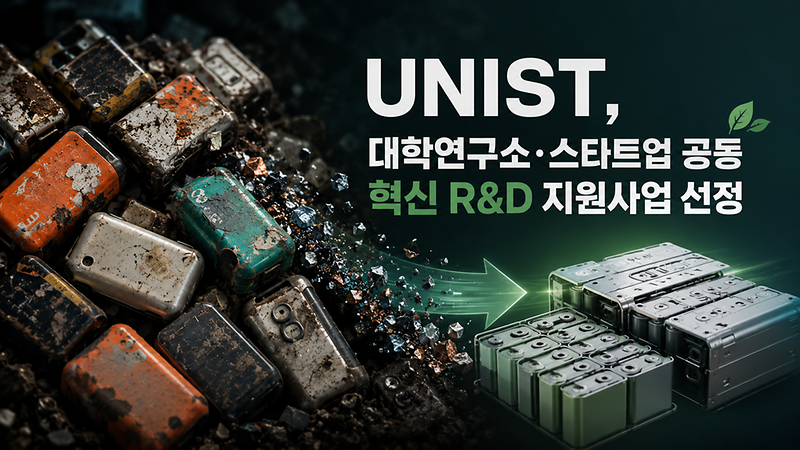
UNIST가 스타트업 4곳과 함께 LFP(리튬인산철) 폐배터리 재활용 기술의 전주기 순환 플랫폼을 구축한다. 사용후 배터리의 분리·회수부터 재생 셀 제조, 성능평가까지 이어지는 기술 체계를 마련해 LFP 배터리 직접 재생 기술을 상용화 단계로 끌어올린다는 목표다. UNIST 해수자원화기술연구센터는 ‘2026년 대학연구소·스타트업 공동 혁신 R&D 지원사업’에 선정돼 4년간 총 60억 원 규모의 사업비를 확보했다고 8일 밝혔다. 이번 선정으로 UNIST는 과학기술정보통신부와 과학기술사업화진흥원(원장 김병국)이 추진하는 스타트업 밀착형 R&D 사업에서 전국 2개 거점 연구소 중 하나를 맡게 됐다. 이 사업은 대학 연구소를 중심으로 스타트업과의 공동 연구개발, 수요기업 발굴, 투자 유치까지 잇는 사업화 연계형 프로그램이다. 연구 성과가 실험실에 머물지 않고 제품·서비스 개발과 시장 검증으로 이어지도록 설계된 사업이다. UNIST가 수행할 과제는 ‘LFP 배터리 직접 재생 전주기 순환 플랫폼 구축’이다. 사용후 배터리에서 유용 자원을 분리·회수하고, 이를 재생 셀 제조와 성능평가로 연결하는 기술 체계를 세운다. 공동연구개발기관으로는 UNIST 입주기업인 이지마이닝, 포세이돈배터리, 데커스솔루션, 한국전지안전 등 4곳이 참여한다. 이번 과제의 핵심은 LFP 폐배터리 재활용 기술을 연구 단계에서 사업화 단계로 전환하는 데 있다. UNIST는 참여 스타트업들이 시장 진입 과정에서 필요로 하는 핵심 기술을 고도화하고, 각 기업의 기술이 제품과 서비스로 구현될 수 있도록 연구개발과 실증 전 과정을 밀착 지원할 계획이다. 산학협력단은 후속 사업화를 뒷받침한다. 비즈니스 모델(BM) 고도화, 마케팅 등 맞춤형 프로그램을 제공하고, 보유한 네트워크와 사업화 인프라를 활용해 수요처 발굴과 투자 연계를 돕는다. 이를 통해 참여 기업의 기술적 한계를 낮추고 시장 진입 속도를 높인다는 방침이다. 강석주 해수자원화기술 연구센터장은 “LFP 배터리 직접 재생 공정은 국내 이차전지 산업이 글로벌 시장에 진입하는 데 필요한 핵심 경쟁력이 될 것”이라고 말했다. 박종래 총장은 “대학은 산업 현장이 필요로 하는 인재를 키우고, 스타트업은 연구와 투자, 수요처 연계를 받을 수 있어야 한다”며 “UNIST를 실제 기술혁신이 가능한 산학협력 플랫폼으로 발전시켜 나가겠다”고 전했다.

원자력공학과, ‘원자력 안전규제라운드테이블’ 개최

커뮤니티 2026년 04월 28일 화요일

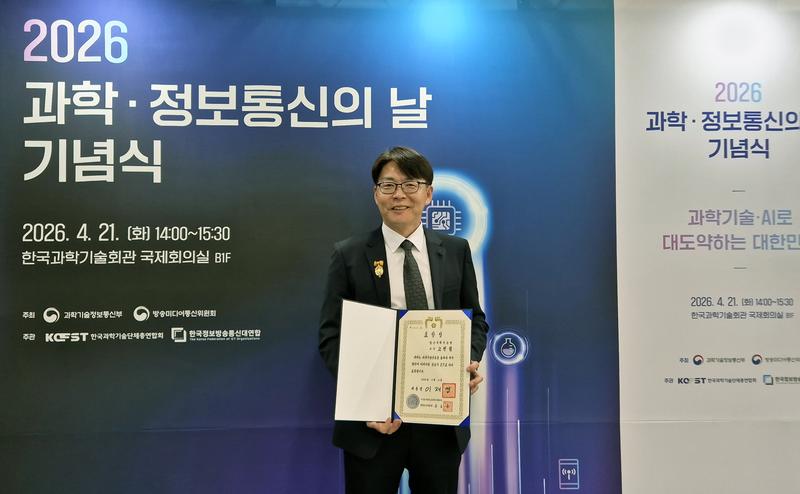
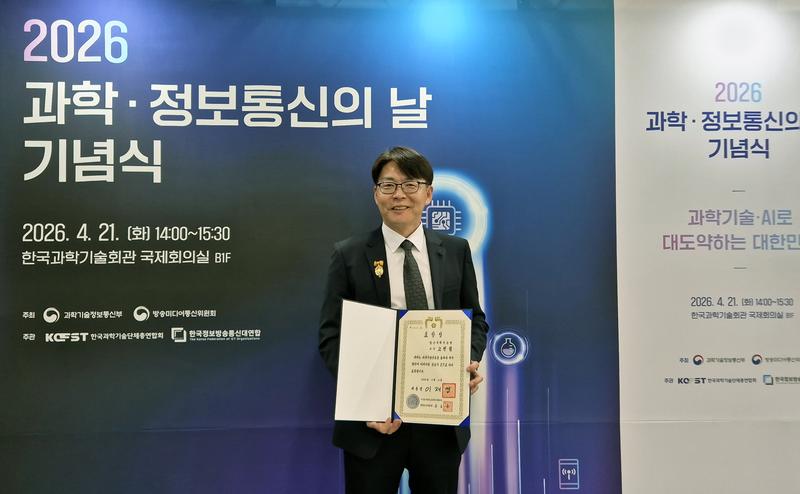
“인간 감각을 전자화하다” 고현협 교수, 과학의 날 대통령표창 영예

UNIST 에너지화학공학과 고현협 교수(학과장)가 2026년 과학의 날 기념 정부포상에서 대통령표창을 수상했다. 생체모사 전자피부와 오감 센서 연구로 인간의 촉각·미각·청각을 플렉서블 전자소자로 구현한 성과를 인정받았다. 고 교수의 대표 성과는 손가락 피부를 본뜬 전자피부다. 사람 피부처럼 촉각은 물론 미세한 질감과 온도까지 동시에 감지한다. 이 전자피부 기술은 다른 감각 영역으로도 확장됐다. 혀의 미각 원리를 응용해 떫은맛까지 구별하는 인공혀, 달팽이관 원리를 적용해 다양한 주파수의 소리를 구분하는 청각 센서가 대표적이다. 피부에 붙여 소리를 내거나 받아들이는 초박막 투명 스피커·마이크로폰도 개발했다. 자연을 모사한 기능성 소재 연구에서도 성과를 냈다. 식물 세포의 광반응성을 모사해 빛으로 이온 흐름을 제어하는 맥신(MXene) 나노채널, 문어 빨판을 본떠 온도에 따라 접착력이 달라지는 스마트 접착패드 등이 있다. 이러한 기술은 로봇이 물체의 질감과 온도를 느끼고, 웨어러블 기기가 몸의 신호를 처리하며, VR·AR 기기가 더 생생한 감각을 전달하는 데 필요한 핵심 부품 기술로 평가된다. 의료·재활 장치, 인간-기계 인터페이스, 사물인터넷 등 차세대 산업 전반으로도 확장될 수 있다. 그는 2010년 UNIST에 부임한 이후 국제 학술 논문 168편을 발표했다. 구글 스칼라 기준 피인용 횟수는 2만1000회, h-지수는 75로, 세계 수준의 학술 영향력을 보여준다. 고현협 교수는 “과학의 날에 수상한 대통령표창은 기능성 나노소재 및 소자 연구실 구성원 모두가 함께 만든 결실”이라며 “늘 곁에서 함께 고민하고 밤을 지새우며 연구를 완성해 온 연구실 식구들에게 깊이 감사한다”고 소감을 전했다. 한편, 이번 표창은 지난 21일 서울 강남구 한국과학기술회관에서 열린 ‘2026년 과학·정보통신의 날 기념식’에서 수여됐다. 행사에서는 과학기술·정보통신 분야 유공자 164명이 정부포상을 받았으며, 과학기술 진흥 부문에서는 대통령표창 22명을 포함해 총 89명이 수상했다.

원자력공학과, ‘원자력 안전규제라운드테이블’ 개최

연구 2026년 04월 22일 수요일

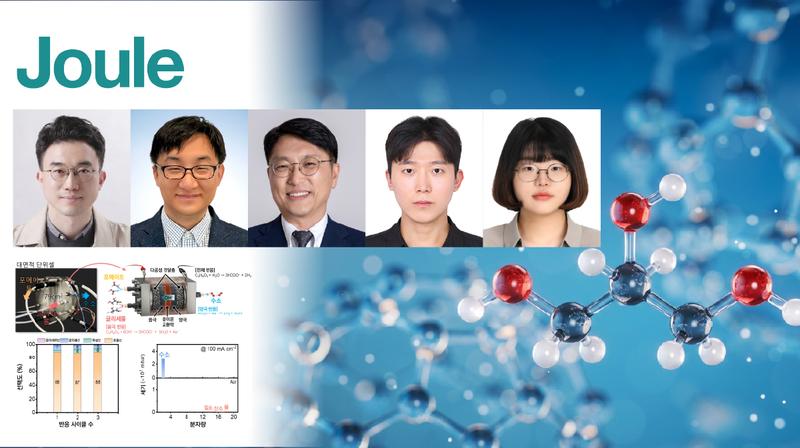
버려진 바이오자원, 수소와 화학소재로 재탄생!

*본 보도자료는 한국재료연구원 주관으로 작성되었습니다. (보도자료 바로 가기) □ 한국재료연구원(KIMS, 원장 최철진) 에너지·환경재료연구본부 수소전지재료연구센터 양주찬 박사 연구팀은 울산과학기술원(UNIST, 총장 박종래) 에너지화학공학과 장지욱, 임한권, 이호식 교수 연구팀과 공동으로, 바이오디젤(식물성 기름 등을 활용한 친환경 연료) 산업 부산물인 글리세롤을 활용해 수소와 고부가가치 화학물질을 동시에 생산할 수 있는 고효율 전기화학 시스템을 개발했다. 이번 연구는 기존 수전해 공정의 핵심 병목이었던 산소 발생 반응(OER, Oxygen Evolution Reaction)을 대체해, 수소 생산 효율을 높이고 활용 범위를 확장한 차세대 전환 기술을 완성했다는 점에서 의미가 있다. □ 수소는 탄소중립 시대의 핵심 에너지원으로 주목받고 있으며, 이를 친환경적으로 생산하기 위한 수전해 기술 개발이 활발히 진행되고 있다. 하지만 기존의 수전해 방식은 물을 전기로 분해하는 과정에서 양극에서 필수적으로 동반되는 산소 발생 반응(OER)이 에너지를 많이 요구하고 반응 속도도 느려 전체 공정 효율을 떨어뜨리는 한편, 경제성까지 낮추는 한계가 있었다. □ 연구팀은 이러한 한계를 극복하고자, 물을 대체해 유기물인 글리세롤을 활용하고 이의 산화 반응(GOR, Glycerol Oxidation Reaction)을 양극에 적용한 음이온 교환막 수전해 시스템을 개발했다. 글리세롤은 바이오디젤 생산 과정에서 대량으로 발생하는 저가 부산물로, 이를 활용하면 기존 대비 더 적은 에너지로 반응을 유도할 수 있다. 또한 구리-코발트 기반의 비귀금속 촉매를 적용해 고가의 귀금속 없이도 높은 반응 활성과 안정성을 확보했으며, 1.31V의 비교적 낮은 전압에서도 110mA/㎠의 높은 전류밀도를 구현했다. □ 특히 이번 기술은 수소 생산과 동시에 포름산염(formate)과 같은 화학 원료를 함께 만들어낼 수 있어 기존 수전해 기술과 차별화된다. 기존 수전해 기술이 수소만 생산하는 단일 공정이었다면, 이번 기술은 에너지와 화학소재를 동시에 생산하는 복합 공정으로 확장한 것이다. 연구팀은 생성되는 물질의 약 96%를 원하는 화학물질(포름산염)로 전환하는 데 성공했으며, 79㎠ 규모의 대면적 전해셀에서도 안정적인 성능을 확인해 실험실 단계를 넘어 실제 산업 공정 적용 가능성도 입증했다. □ 이번 기술은 폐바이오 자원을 활용해 수소와 화학 원료를 동시에 생산할 수 있는 전기화학 플랫폼으로, 그린수소 생산 비용 절감과 자원 활용 효율을 동시에 높일 수 있다는 점에서 의미를 가진다. 특히 에너지와 화학 산업을 하나의 공정으로 연결하는 탄소중립형 생산 기술로, 기존의 분리된 생산 구조를 통합할 수 있다는 가능성이 있다. 여기에 나아가 연속공정 전환과 메가와트(MW)급 스케일로 확장할 수 있어 실제 산업 공정에 적용할 수 있는 실용적 기술로 발전이 기대된다. □ 연구책임자인 KIMS 양주찬 책임연구원은 "이번 연구는 저렴한 비귀금속 촉매를 대량으로 합성하고, 이를 실제 상용화 가능한 수준의 대용량 전해조 시스템에 적용해 성능을 입증했다는 데 큰 의미가 있다"고 강조했다. 또한 UNIST 장지욱 교수는 "글리세롤과 같은 바이오 부산물을 고부가가치 화합물로 전환하는 기술은 탄소 중립 달성과 수소 경제 활성화를 동시에 앞당길 수 있는 핵심 전략이 될 것"이라고 말했다. □ 본 연구는 국가과학기술연구회, 한국에너지기술평가원, 한국연구재단, 한국산업기술평가관리원의 국가연구개발사업의 지원을 받아 수행됐다. 또한 한국과학기술정보연구원의 슈퍼컴퓨팅 인프라와 포항가속기연구소의 방사광 가속기 시설을 활용하여 핵심 분석 및 계산 연구를 진행했다. 연구 결과는 에너지 분야 세계적 권위 학술지인 줄(Joule, IF: 35.4)에 2026년 3월 18일자로 온라인 게재됐다.

원자력공학과, ‘원자력 안전규제라운드테이블’ 개최

연구 2026년 04월 15일 수요일

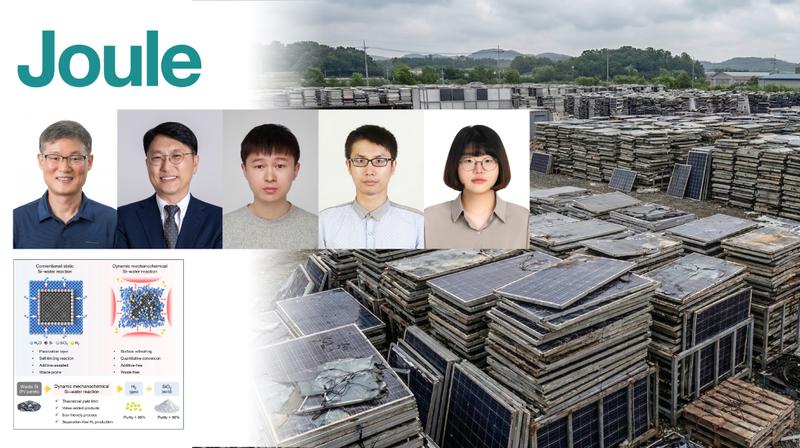
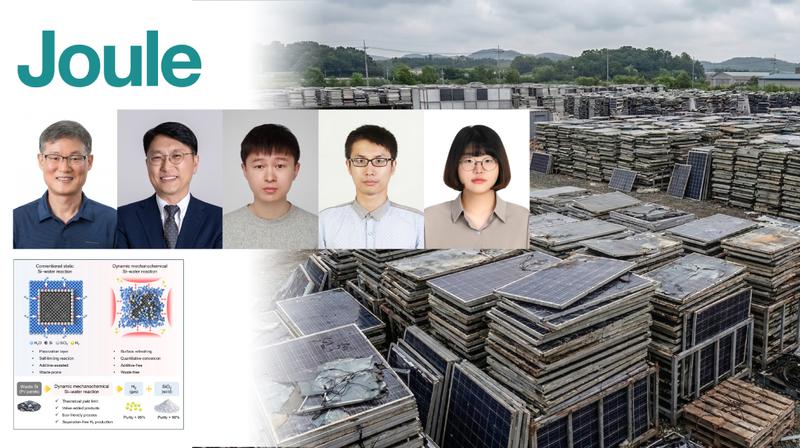
‘애물단지’ 태양광 발전 폐패널로 수소 만든다!

수명을 다한 1세대 태양광 발전 폐패널이 쏟아지고 있는 가운데, 태양광 폐패널의 실리콘으로 고순도 수소와 고부가가치 화학소재를 동시에 생산할 수 있는 기술이 나왔다. 2차 환경 오염 우려 때문에 매립이 어렵고 고온 소각조차 쉽지 않은 태양광 폐패널을 경제적이면서도 친환경적으로 처리할 기술로 주목받고 있다. UNIST 에너지화학공학과 백종범 교수팀은 폐태양광 패널의 실리콘을 활용해 고순도 수소와 고부가가치 산업용 소재인 실리카를 동시에 생산하는 고효율 공법을 개발했다고 6일 밝혔다. 실리콘은 물과 반응해 수소와 실리카를 만들 수 있다. 하지만 실제로는 반응이 시작되자마자 실리콘 표면에 형성되는 실리카 피막이 물의 접근을 차단해 반응이 멈춰 버린다. 이 때문에 수소 생산량이 이론적 최대 생산량에 턱없이 부족했다. 연구팀은 강한 약제를 사용하지 않고도 이 실리카막을 제거할 수 있는 공법을 개발해 고순도의 수소를 기존보다 최대 5배 많이 생산해 냈다. 실리콘과 물을 작은 구슬이 들어 있는 용기에 넣고 굴리면, 구슬과 실리콘 입자가 서로 부딪히면서 실리카 보호막을 반복해서 부수고 벗겨내는 원리다. 실험 결과 상용 실리콘 1g당 약 1706mL의 수소가 생산됐다. 이는 이론적 최대 생산량(1713mL g⁻¹)의 99.6%에 해당하는 수준이다. 일반적인 열화학 방식이 이론 최대치의 약 18~28% 수준에 머무는 것과 비교하면 최대 5배 높은 수소 생산 효율이다. 또 폐태양광 패널에서 직접 얻은 실리콘 가루를 이용한 실험에서도 이론적 최대치의 약 98% 수준에 이르는 수소 생산 성능을 기록했다. 함께 생산된 실리카도 촉매 지지체로서 우수한 성능을 보였다. 지지체는 촉매의 활성 금속 입자를 고르게 분산시켜 주고 고정해 주는 역할의 물질이다. 생산된 실 리카를 사용한 니켈 촉매는 이산화탄소를 메탄으로 바꾸는 화학 반응에서 상용 실리카를 사용한 촉매보다 더 높은 이산화탄소 전환율과 메탄 선택도를 기록했다. 실리카 표면에 많은 수산기(-OH)가 촉매 입자를 더 잘 분산시키기 때문인 것으로 분석됐다. 경제성 측면에서 부산물인 실리카로 얻는 수익을 아예 제외하고 계산하더라도, 이 공정의 수소 생산 단가는 기존 열화학 방식보다 수십에서 수천 배나 저렴한 것으로 나타났다. 실리카 판매 이익까지 더하면 수소를 생산할수록 오히려 수익이 나는 ‘마이너스 비용 구조’도 가능하다는 분석이다. 또 한 번씩 끊어서 작업하는 배치 방식보다 끊임없이 기계를 돌리는 연속식 공정에서 생산량과 에너지 효율이 훨씬 뛰어나, 향후 대규모 산업 현장에 바로 투입하기에도 수월하다. 백종범 교수는 “태양광 폐패널에서 나오는 실리콘을 활용해 친환경적으로 수소를 생산하면서 산업적으로 활용 가능한 실리카까지 얻을 수 있다는 점이 기술의 장점”이라며 “처치 곤란인 폐태양광 패널을 고부가가치 자원으로 탈바꿈시켜 자원 순환 경제를 구축하는 데 큰 도움이 될 것"이라고 말했다. 연구 결과는 에너지 분야 최고 권위 학술지인 줄(Joule)에 3월 27일 자로 온라인 공개됐으며, 공법의 핵심인 기계화학 공정은 줄의 퓨처 에너지(Future Energy) 부문에 3일 소개됐다. 퓨처 에너지는 지속 가능한 미래를 위한 유망 에너지 기술과 기술의 산업적 적용 가능성을 다루는 기획 코너다. 백 교수팀은 줄의 초청을 받아 관련 기술을 소개했다. 연구 수행은 과학기술정보통신부 한국연구재단 등의 지원으로 이뤄졌다.

원자력공학과, ‘원자력 안전규제라운드테이블’ 개최

연구 2026년 04월 08일 수요일

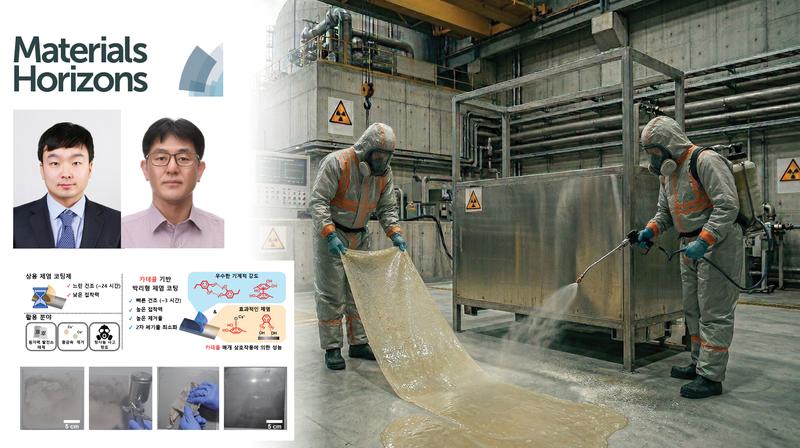
방사성 오염물질 제거 3시간이면 끝!

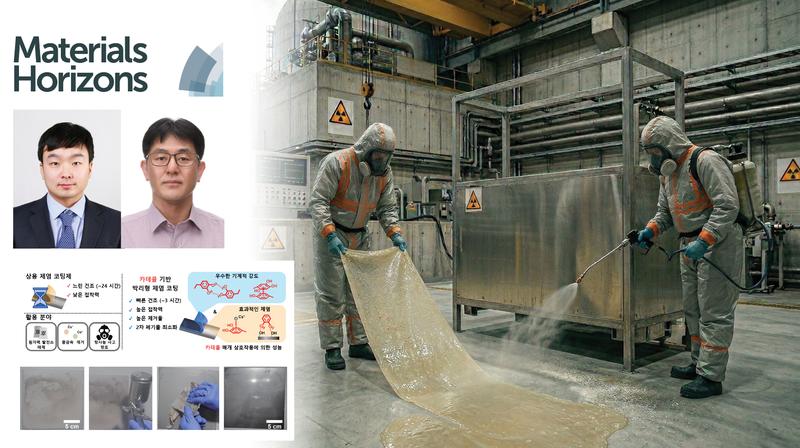
* 본 보도자료는 한국원자력연구원 주관으로 작성되었습니다. (보도자료 바로가기) □ 원자력 시설에서는 방사성 물질을 다루기 때문에 건물, 장비 등의 표면에 흡착된 방사성 핵종을 신속하게 제거하는 기술이 필요하다. 기존의 화학 세정, 고압 세척 등의 방식은 오염물질 확산과 다량의 오염수 문제가 있어 오염된 표면에 코팅제 도포로 제염하는 방식이 주목받고 있다. 최근 국내 연구진이 기존 코팅제보다 월등한 성능을 가진 제염 코팅 기술을 개발했다고 한다. □ 한국원자력연구원(이하 연구원)은 울산과학기술원(이하 UNIST)과 공동으로 강력한 접착력을 가진 카테콜(catechol) 물질을 합성한 폴리우레탄(polyurethane) 기반 박리형 제염 코팅 기술을 개발했다고 26일 밝혔다. ㅇ 카테콜은 홍합의 접착 단백질에서 유래한 화학 물질로 벤젠(C6H6) 고리에 알코올기(OH)가 두 개 붙어있는 페놀 종류이며, 다양한 표면에 강하게 부착할 수 있는 특성을 가진다. ㅇ 이에 연구원 원자력시설청정기술개발부 양희만 박사 연구팀과 UNIST 이동욱 교수팀은 카테콜 물질을 폴리우레탄 고분자 사슬 말단에 합성해 강력한 접착력을 갖는 제염 코팅제를 개발했다. ㅇ 코팅제를 방사성 오염 표면에 도포 후 건조해 코팅층을 만들고, 이를 테이프처럼 벗겨내는 방식으로 방사성 물질을 신속하게 제거할 수 있다. □ 연구팀이 개발한 제염 코팅제는 기존 상용 코팅제보다 방사성 오염물질 제거 효율이 높고, 소요 시간을 획기적으로 단축해 월등한 성능을 입증했다. ㅇ 제염 코팅제에 대한 방사성 동위원소 실험을 진행한 결과, 스테인리스강 표면의 방사성 세슘 이온 제거 효율은 약 94.9%로 상용 제품의 93.8%에 비해 높았다. 특히, 상용 제품은 작업에 약 24시간이 필요하지만, 연구팀의 코팅제는 3시간이면 충분해 작업 효율을 획기적으로 높일 수 있다. ㅇ 또한, 작은 구멍이 많은 시멘트 표면에 대한 실험에서는 코팅제 도포, 1시간 건조 및 박리 과정을 2회 반복한 결과, 짧은 시간에도 불구하고 제거 효율이 13.1%로 상용 코팅제(8.4%)보다 1.5배 높은 성능을 확인했다. ㅇ 이러한 성능 향상은 카테콜 물질이 가진 강한 접착력과 코팅 내부 결합력 덕분에 오염된 입자와 표면을 효과적으로 포집할 수 있어 가능했다. □ 한편, 연구팀은 사용 후 코팅 폐기물을 아세톤 용매에 다시 용해할 수 있음을 확인했다. 이를 통해 방사성 오염물을 분리하고, 흡착제를 이용해 방사성 핵종을 제거함으로써 폐기물 저감 및 소재 재활용 가능성도 제시했다. □ 이번 연구는 국방과학연구소 민군협력진흥원 민군겸용기술개발사업의 지원으로 수행되었으며, 연구 결과는 재료과학 분야 권위적 학술지인 머터리얼즈 호라이즌스(Materials Horizons)에 2026년 3월 온라인 게재되었다. ※ 논문명: 대면적 방사성 세슘 제염을 위한 박리 가능한 카테콜 종결 폴리우레탄 코팅 (Strippable catechol-terminated polyurethane coating for large-area radioactive cesium decontamination) □ 이번 연구를 주도한 양희만 박사는 “이번 기술은 기존 제염 코팅 대비 빠른 제염 속도와 높은 제거 효율, 코팅 폐기물의 처리 및 재활용 가능성까지 제시했다는 점에서 의미가 크다”며, “향후 원전 해체 및 방사능 사고 대응 등 원자력 안전 분야에서 다양하게 활용될 것”이라고 밝혔다.

원자력공학과, ‘원자력 안전규제라운드테이블’ 개최

연구 2026년 04월 06일 월요일

태양광 전기와 그린수소 생산 동시 겨냥한 계면 기술 개발

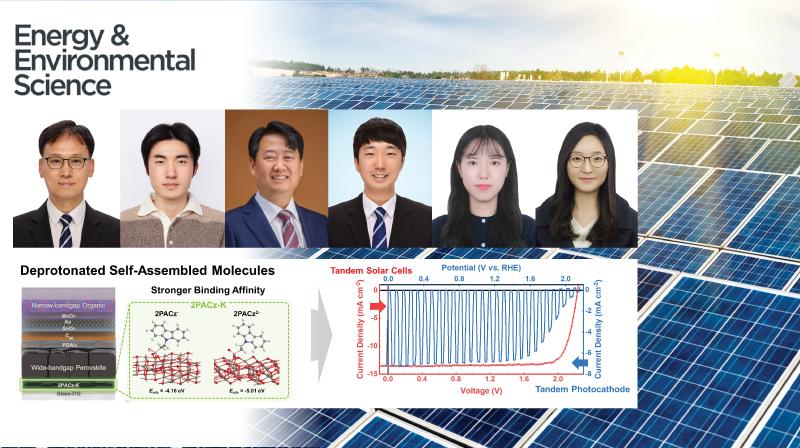
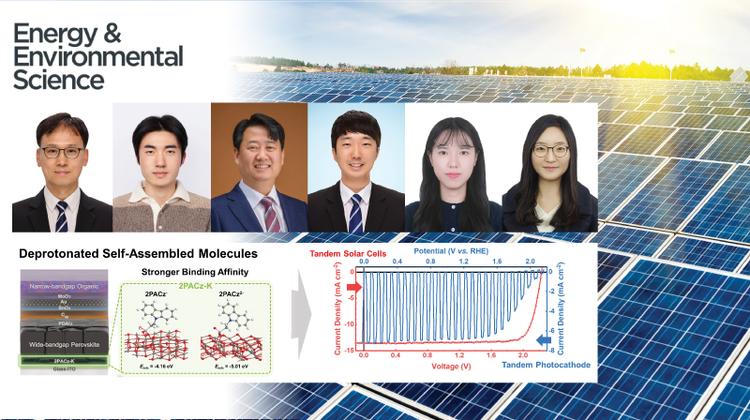
페로브스카이트–유기 탠덤 태양전지의 효율과 안정성을 동시에 높일 수 있는 새로운 계면 제어 기술이 개발됐다. 태양전지뿐 아니라 태양에너지를 이용해 수소를 생산하는 광전극 장치에도 적용할 수 있는 차세대 태양에너지 활용 기술이다. UNIST 탄소중립대학원 김진영·김동석 교수와 에너지화학공학과 신승재 교수 연구팀은 자가조립 분자층(Self-Assembled Monolayer, SAM)의 화학 상태를 제어해 페로브스카이트–유기 탠덤 태양전지의 성능과 수명을 향상시키는 기술을 개발했다고 밝혔다. 페로브스카이트–유기 탠덤 태양전지는 서로 다른 파장의 빛을 흡수하는 두 종류의 태양전지를 위아래로 쌓아 태양광을 보다 효율적으로 전기로 변환하는 차세대 태양전지다. 하지만 탠덤 구조에서 투명전극과 페로브스카이트 층 사이의 계면이 불안정하면 전하 이동이 방해되고 장기 안정성이 떨어지는 문제가 있었다. 연구팀은 이 계면에 형성되는 자가조립 물질인 2PACz의 화학 상태를 조절하는 방법을 제시했다. 탄산칼륨(K2CO3)을 이용해 2PACz 분자의 인산기에서 수소 이온이 부분적으로 떨어져 나가도록 유도(탈양성자화)하면, 분자가 음전하를 띠면서 ITO 투명전극과 더 강하게 결합한다. 이 과정에서 형성된 탈양성자화된 2PACz(2PACz-K)는 전극 표면에 더욱 안정적으로 부착되어 태양전지 제작 과정에서 용매에 의해 씻겨 나가지 않고 균일한 계면을 형성한다. 이 기술을 적용한 페로브스카이트 태양전지는 더 높은 전압과 향상된 전하 전달 특성을 보였다. 이를 기반으로 제작된 페로브스카이트–유기 탠덤 태양전지는 최대 25.1%의 전력 변환 효율과 2.23V의 높은 개방전압을 기록했다. 또한 최대출력점 추적(MPPT) 조건에서 220시간 연속 구동 후에도 초기 성능의 80% 이상을 유지하는 안정성을 보였다. 연구팀은 이 계면 기술을 태양광을 이용해 물을 분해해 수소를 생산하는 광전극 장치에도 적용했다. 개발된 기술을 적용한 탠덤 광전극은 외부 전압 없이도 물 분해 반응을 유도할 수 있는 높은 광전압을 나타냈으며, 태양에너지를 수소로 전환하는 효율은 최대 7.7%에 달했다. 김진영 교수는 “분자 수준에서 계면의 화학 상태를 제어하는 전략을 통해 태양전지의 성능과 안정성을 획기적으로 개선했다”며, “태양광 발전과 그린수소 생산을 통합한 차세대 에너지 시스템 개발에 활용될 수 있을 것”이라고 밝혔다. 이번 연구는 손중건 박사, 구하은 석·박사 통합과정 연구원, 이우진 박사가 제 1저자로 참여했다. 연구 결과는 에너지화학분야 권위지인 에너지와 환경과학(Energy & Environmental Science)에 2월 5일 게재됐다. 연구 수행은 과학기술정보통신부 한국연구재단 (NRF)의 지원을 받아 이루어졌다.

원자력공학과, ‘원자력 안전규제라운드테이블’ 개최

연구 2026년 03월 30일 월요일

원자 배열 흩트렸더니 배터리 초기 에너지 손실 0.6%로 뚝

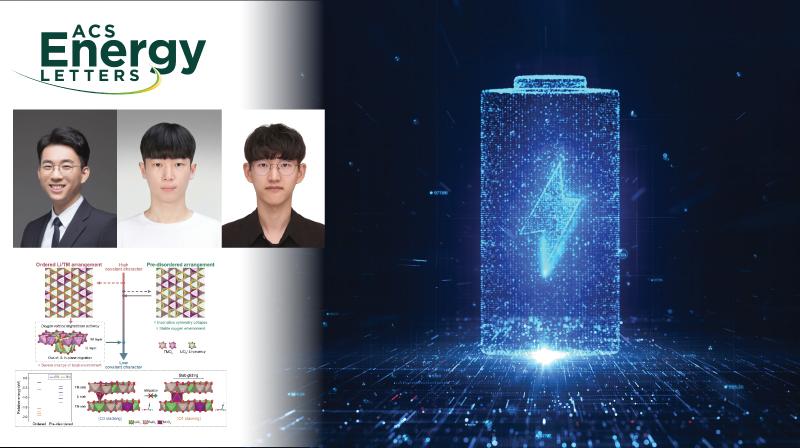
차세대 배터리 양극인 ‘리튬 과잉 층상 산화물’ 소재의 구조 붕괴를 해결할 수 있는 기술이 나왔다. 배터리의 에너지 효율을 낮추고 수명을 줄이는 요인을 제거해 리튬 과잉 층상 산화물 양극재를 이용한 고에너지 밀도 배터리 개발이 빨라질 전망이다. UNIST 에너지화학공학과 이현욱 교수와 포항가속기연구소 정영화 박사, KAIST 서동화 교수팀은 원자 배열을 일부러 무질서하게 설계해 구조 붕괴를 억제함으로써 에너지 효율 저하를 잡은 리튬 과잉 층상 산화물 양극 소재를 개발했다고 12일 밝혔다. 리튬 과잉 층상 산화물은 금속만 반응에 참여하는 일반 배터리와 달리 산소까지 반응에 참여해 배터리 용량을 크게 높일 수 있는 차세대 소재지만, 이 과정에서 발생하는 연쇄적인 구조 붕괴가 고질적인 문제다. 구조 변형 때문에 첫 충·방전 시 전압 차이와 에너지 손실이 커지고, 충·방전이 반복될수록 전압이 점차 떨어져 배터리 수명을 다하게 된다. [연구그림] 무질서한 원자 배열을 통한 층간 슬라이딩 억제와 구조 안정성 향상 연구팀은 금속 원자 배열을 불규칙하게 섞는 방식으로 이러한 구조 붕괴를 억제한 리튬 과잉 층상 산화물을 개발했다. 불규칙한 배열이 오히려 첫 충전 시 층 전체가 한 번에 미끄러지는 현상을 막고 물리적 스트레스를 고르게 분산시켜, 구조의 뼈대가 되는 전이 금속과 산소 간의 결합을 유지 시켜준 덕분이다. 이러한 원리는 밀도범함수(DFT) 이론계산과 포항가속기연구소의 첨단 방사광 가속기 분석을 통해 교차 검증됐다. 이 전극의 성능 평가 결과, 첫 번째 충전과 방전 전압 간 차이가 기존 소재의 절반 수준인 0.31V로 감소했으며, 초기 에너지 손실이 0.6%에 그쳤다. 반면 원자 배열이 규칙적인 기존 소재는 첫 충전 전압과 방전 전압의 차이가 2배로 벌어졌으며, 25.8%의 에너지가 손실됐다. 충전 전압과 방전 전압 차이가 클수록 에너지 손실이 크다. 또 이후 충·방전을 반복할 때 나타나는 전압 감소 속도도 사이클당 10분의 1수준으로 낮아져 160회 충·방전 이후에도 초기 에너지의 98%를 유지했다. 제1저자인 최명준 연구원은 “결함으로 치부되던 원자 배열의 무질서함을 역으로 이용해 구조적 안정성을 확보한 접근”이라며 “특정 조성에 국한되지 않고 다양한 리튬 과잉 층상 산화물 양극 소재에 적용될 수 있는 보편적 접근법”이라고 설명했다. 이현욱 교수는 “리튬 과잉 층상 산화물은 이론적으로 매우 높은 에너지 밀도를 낼 수 있는 유망한 양극 소재지만 구조 붕괴와 전압 감소 문제로 상용화에 어려움이 있었다”라며 “이번 기술은 더 작고 가벼우며 더 많은 전기에너지를 저장할 수 있는 차세대 고에너지 밀도 배터리 상용화에 도움이 될 것”이라고 기대했다. 이번 연구는 과학기술정보통신부 한국연구재단 나노·미래소재원천기술개발사업과 원천기술 국제협력개발사업의 지원으로 수행됐으며, 연구 결과는 에너지 분야 국제학술지인 에이씨에스 에너지 레터스(ACS Energy Letters)에 2월 3일 온라인 게재됐다. (끝)

원자력공학과, ‘원자력 안전규제라운드테이블’ 개최

Research 2026년 06월 18일 목요일

Game-Changing Interface Coating Enables Scalable, High-Efficiency Perovskite/Silicon Solar Cells

Abstract Self-assembled monolayers (SAMs) represent an effective strategy for the development of perovskite solar cells (PSCs). High-performance PSCs are typically fabricated in an inert atmosphere because ambient moisture disrupts phosphonic-acid SAMs on transparent conductive oxides, leading to surface inhomogeneity and direct exposure of the transparent conductive oxide. However, this dependence on glovebox fabrication constraints scalability and cost-effective manufacturing. Here we present a ternary self-assembled molecular contact comprising glycerol dimethacrylate and 1-acetylguanidine that serves as a process-tolerant hole-selective contact. Glycerol dimethacrylate acts as a cosolvent during SAM deposition to improve film uniformity and is subsequently transformed into a hydrophilic binary network upon mild thermal curing, firmly anchoring the SAM to the substrate, whereas 1-acetylguanidine is incorporated to further suppress interfacial defects. Wide-bandgap PSCs fabricated in ambient conditions achieve a power conversion efficiency of 21.20% (1.00 cm2), with an open-circuit voltage of 1.28 V. When implemented in monolithic perovskite/silicon tandems, cells achieve a power conversion efficiency of 31.72% (certified 31.36%) and 32.60% for fabrication in ambient and inert conditions, respectively. These findings demonstrate that our tailored hole-selective contact provides a robust and process-tolerant interfacial engineering approach for high-efficiency perovskite and tandem photovoltaics manufactured under ambient conditions. UNIST, in collaboration with King Abdullah University of Science and Technology (KAUST), has developed a groundbreaking coating that unlocks large-scale, ambient-condition production of high-performance perovskite/silicon tandem solar cells. Led by Distinguished Professor Sang Il Seok of the School of Energy and Chemical Engineering and Professor Kyoung Jin Choi of the Department of Materials Science and Engineering, the team engineered a three-component interface layer that ensures uniform coverage and reduces defects during fabrication. This innovation allows the production of tandem cells outside of costly, sealed environments—an essential step toward commercialization. The resulting devices achieved a certified efficiency of 31.36%, with peak performance reaching 31.72%. Remarkably, they maintained over 92% of their initial efficiency after 600 hours in oxygen-rich, high-temperature conditions, and over 90% after 1,000 hours under continuous illumination—all without encapsulation. This technology not only delivers record efficiencies but also simplifies manufacturing, drastically reducing costs and enabling large-area production in standard environments. It paves the way for affordable, high-efficiency solar solutions that can be deployed at scale. The research team includes Gwisu Kim and Young Im Noh from UNIST, and Adi Prasetio from KAUST as first co-authors. The corresponding authors are Professors Sang Il Seok and Kyoung Jin Choi from UNIST, and Professor Stefaan De Wolf from KAUST. Contributions also came from researchers from the Chinese University of Hong Kong, Shenzhen (CUHKSZ) and Forschungszentrum Jülich GmbH (FZJ) in Germany. Professor Choi states, “Our findings align with the K-Moonshot Project, a national initiative focused on developing ultra-high-efficiency multi-junction solar cells, which brings us closer to realizing practical and affordable solar energy.” Professor Seok adds, “Demonstrating stability and high efficiency in open air indicates that the technology is ready for industrial-scale production.” Published in Nature Photonics on June 1, this breakthrough was supported by Hyundai Motor Company, the National Research Foundation of Korea (NRF), the Ministry of Science, and ICT (MSIT), the Korea Energy Technology Evaluation and Planning Agency (KETEP), and the Ministry of Trade, Industry and Energy (MOTIE). Journal Reference Gwisu Kim, Adi Prasetio, Young Im Noh, et al., “Ternary self-assembled molecular contact for ambient-processed perovskite/silicon tandem solar cells,” Nat. Photon. , (2026).

원자력공학과, ‘원자력 안전규제라운드테이블’ 개최

Research 2026년 06월 17일 수요일

Roll-to-Roll Manufacturing of Ruthenium-Loaded Carbon Fiber Electrodes for Efficient Hydrogen Production

Abstract Carbon fiber-based electrocatalysts offer significant advantages over conventional powder catalysts, including enhanced active site exposure, superior conductivity, faster reaction rates, lower costs, and improved stability under harsh conditions. In this study, we introduce a rapid and scalable method for spinning carbon-supported metal catalysts into their fibrous forms to achieve uniform catalyst structures that enable roll-to-roll manufacturing. We demonstrate uniform ruthenium (Ru) nanoparticle-loaded carbon fibers by spinning polyacrylonitrile (PAN)-Ru phenanthroline complexes and annealing at 1200 °C for the optimum Ru particle size distribution. We found that the interaction of the Ru complex with the nitrile (−C≡N) group of PAN enabled rheological control and ensured monodisperse Ru confinement. Our investigation of the mechanism details the microstructural evolution during carbonization and oxygen plasma treatment, showing exceptional enhancement in the performance of Ru-embedded carbon fabric electrocatalysts. Ultimately, our rheology-driven spinning protocol bridges the gap between laboratory-scale synthesis and industrial manufacturing of fabric electrocatalysts, providing a versatile platform for nanoconfinement that offers critical insights into the structural evolution of metal–polymer nanocomposites for next-generation energy applications. A research team affiliated with UNIST has introduced a scalable process to produce long-lasting, fiber-shaped electrodes for water electrolysis, paving the way for large-scale hydrogen production. Professor Han Gi Chae of the Department of Materials Science and Engineering and Professor Jong-Beom Baek of the School of Energy and Chemical Engineering collaborated with Professor Cafer T. Yavuz at King Abdullah University of Science and Technology (KAUST). Traditional electrodes rely on coating catalysts onto conductive substrates, often using binders that block active surfaces. In contrast, these new fibers act as both support and conductor, allowing water and electrolytes to flow freely and hydrogen to escape efficiently. Central to this method is the embedding of ruthenium particles within the polymer fibers, resulting in improved catalyst dispersion and durability. By mixing a viscous polymer-Ru precursor and extruding it through a nozzle, the team produced continuous fibers. When heat-treated at 1200°C, these fibers develop a uniform distribution of catalytic nanoparticles inside and on the surface, preventing clumping and ensuring consistent activity. Achieving this required precise control over the interaction between the Ru precursor and the polymer. The researchers optimized the conditions to maintain even dispersion during fiber formation. They further enhanced the surface exposure of catalytic sites through oxygen plasma treatment, significantly improving performance and stability. Testing showed that these fibers could operate continuously for more than 170 hours at a high current density of 500 mA/cm² without degradation. Their catalytic activity surpassed that of conventional platinum electrodes, highlighting their potential for practical applications. The study was primarily led by Dr. Ga-Hyeun Lee from UNIST and Professor Seok-Jin Kim from KAUST, who served as the first authors, with researcher Inkyung Baek contributing as a co-author. This research offers new insights into the microstructural evolution of metal-polymer nanocomposites and demonstrates a scalable approach to fabricating fiber electrodes for efficient hydrogen production. Professor Chae noted, “Embedding metal catalysts uniformly within carbon fibers enhances electrode stability. This technique could extend beyond water electrolysis to other catalytic systems where durability and uniform reactivity are crucial.” The research was published in ACS Nano (Impact Factor: 16.1, Cite Score: 24.2)Impact Factor: 16.1, Cite Score: 24.2) on May 7, and supported by the Ministry of Science and ICT (MSIT), the Ministry of Education (MOE), and the National Research Foundation of Korea (NRF). Journal Reference Ga-Hyeun Lee, Seok-Jin Kim, Jung-Eun Lee , et al., “Rheological Pathways to a Scalable Ruthenium Nuclei-Anchored Carbon Fiber Catalyst,” ACS Nano, (2026).

원자력공학과, ‘원자력 안전규제라운드테이블’ 개최

Research 2026년 05월 27일 수요일

New Research Reveals High-Performance Organic Solar Cells Surpassing AI Predictions

Abstract Descriptor-based artificial intelligence (AI) has emerged as a paradigm for molecular design in organic solar cells (OSCs); However, it inherently overlooks collective effects governed by bond hybridization, intermolecular coupling, and aggregation thermodynamics. Such effects are encoded at the solution stage, where pre-aggregation of photoactive materials dictates nucleation pathways, phase separation, and molecular ordering during film formation. Herein, we introduce a YBOV non-fullerene acceptor featuring sp2-hybridized branched side chains that exhibit an unprecedentedly strong solution-state pre-aggregation propensity. This behavior translates into highly ordered solid films with a densely packed crystalline microstructure, enabled by a thermodynamically stabilized core–terminal dimer. As a result, incorporation of YBOV into OSCs not only outperforms the benchmark L8-BO-based device, but also confers an effective nucleation seeding-agent function across diverse host OSC platforms, delivering efficiencies of up to 19.67% via green-solvent processing by alleviating the intrinsic current–voltage trade-off. Machine-learning predictions largely match experimental photovoltaic parameters with a slight upward bias, except for open-circuit voltage, which exhibits anomalous behavior driven by pre-aggregation–driven seeding effects beyond descriptor-based AI. This work establishes sp2-hybridized branched side chains as a new molecular design principle, introducing pre-aggregation-enabled seeding effects beyond AI prediction and providing a universal strategy for high-performance OSCs. Researchers from UNIST and Sungkyunkwan University have created a new type of organic solar cell (OSC) that outperforms existing predictions and highlights a hidden factor in device performance. The secret lies in how molecules clump together in solution—a phenomenon that traditional AI models overlook. Professor Changduk Yang from the School of Energy and Chemical Engineering, in collaboration with Professor Doo-Hyun Ko from Sungkyunkwan University, reported a new OSC with a power conversion efficiency (PEC) of 19.67% through a clean, environmentally friendly process. OSCs are lightweight, flexible, and capable of covering large surfaces. They can be integrated into building facades, windows, and wearable devices. The manufacturing process involves dissolving organic materials in solvents and coating them onto substrates—an approach that's simple and scalable. The researchers designed a new molecule, named YBOV, with branched side chains that promote strong pre-aggregation in solution. This aggregation acts like a seed during film formation, guiding molecules to pack more orderly. The result is a crystalline, densely packed active layer that improves charge flow and boosts efficiency. Notably, devices made with YBOV achieved high performance even when produced with eco-friendly ortho-xylene solvent, avoiding toxic chlorinated options. YBOV also proved versatile. When added to different donor materials or used as an acceptor in various blends, it consistently increased device efficiency. Its aggregation behavior enhances performance across a range of formulations. However, this clustering effect escapes prediction by standard AI models. When trained on 750 device measurements, the models underestimated the open-circuit voltage for YBOV-based cells. This shows that AI, which predicts based on molecular structure alone, cannot fully capture the collective behaviors that influence real-world performance. “Our work introduces a new design principle,” said the research team. “It considers how molecules behave in solution—something AI cannot currently predict. Combining this insight with eco-friendly processing opens new paths for commercializing high-performance, sustainable organic solar cells.” Supported by the National Research Foundation of Korea (NRF) and the InnoCore program of the Ministry of Science and ICT (MSIT), the study involved Seokhwan Jeong, Donghoo Won, and Zhe Sun from UNIST who contributed equally. The findings of this research were published in Advanced Energy Materials on April 20, 2026. Journal Reference Seokhwan Jeong, Donghoo Won, Zhe Sun, et al ., “Beyond Descriptor-Based AI Design: Sp2-Hybridized Branched Side Chains Enable Pre-Aggregation–Driven Seeding Effects in Green-Solvent-Processed Organic Solar Cells,” Adv. Energy Mater., (2026).

원자력공학과, ‘원자력 안전규제라운드테이블’ 개최

Research 2026년 05월 26일 화요일

New Study Unveils Water-Responsive Luminescent Material

Abstract Hydrogel-based photonic systems integrating luminescent emitters offer promise as soft, reconfigurable optical platforms, yet most designs lack internal optical engineering to control light propagation and confinement. Here, we present a lithographically programmable soft-photonic platform in which upconversion nanocrystals (UCNs) encapsulated within fluorocarbon nanoemulsion droplets are embedded in a poly(ethylene glycol) diacrylate (PEGDA) hydrogel microdome. Upon drying, strong refractive index contrast between the PEGDA matrix and fluorocarbon droplets creates a cooperative optical microenvironment that structures the near-infrared (NIR) excitation beam into a speckle-like field with localized hot spots while extending the photon dwell time within the microdome via internal reflection-based waveguiding. These effects yield a fully reversible, greater than sevenfold enhancement of upconversion luminescence—well beyond simple concentration or mechanical densification. This optical gain originates from multiple-scattering-assisted speckle excitation activated only in the contracted microdome state. Because UCNs are pumped by invisible NIR speckle illumination that rapidly varies in 3D across the microdome height, the incoherent sum of the photoluminescence manifests as a homogeneous filter-free visible brightness increase. The hydrogel microdomes, fabricated via a customized digital micromirror device (DMD)-based microlithography, enable high-resolution patterning of moisture-responsive displays, multicolor emission motifs, and reversible QR-code encryption, establishing a scalable route toward speckle-engineered soft photonic systems.' Researchers at UNIST have created a new material that dims when it absorbs moisture. This innovation could lead to water-sensitive security features, humidity sensors, and environmental-reactive displays. Led by Professor Jiseok Lee from the School of Energy and Chemical Engineering and Professor Jung-Hoon Park from the Department of Biomedical Engineering, the team developed a hydrogel with embedded upconversion nanocrystals (UCNs). When dry, the material glows more than seven times brighter than when wet. The core design involves oil droplets trapped inside a hydrogel dome. When near-infrared (NIR) light hits the nanocrystals, they emit visible light. In this structure, scattering within the oil droplets traps the light, boosting brightness. When the hydrogel absorbs water, its internal scattering drops, and the glow fades. The team demonstrated how this material can hide and reveal information. In one test, a hidden pattern beneath the hydrogel becomes visible only when water is applied, as the glow weakens. They also created QR codes that are scannable when dry but vanish when wet, making them useful for anti-counterfeiting. Durability stood out. The material retained consistent brightness over 100 wet-dry cycles, with less than 4% variation. It responds rapidly—within 0.1 seconds—fading visibly in seconds after contact with water. Lead author Chaeyeong Ryu said, “We improved brightness by designing the light pathways inside the hydrogel, without changing the nanocrystals. This makes the material ideal for moisture-triggered devices.” Professor Lee added, “The ability to program the color and pattern of the hydrogel microdome, combined with simple manufacturing, opens new paths for security, sensors, and displays across industries.” The findings of this research have been published in Advanced Functional Materials on April 20, 2026. This work was supported by the National Research Foundation of Korea (NRF) and the Ministry of Science and ICT (MSIT). Journal Reference Chaeyeong Ryu, Byungcheon Yoo, Seunghun Lee, et al ., “Speckle-Engineered Upconversion Amplification in Nanoemulsion-Templated Hydrogel Microdomes,” Adv. Funct. Mater. , (2026).

원자력공학과, ‘원자력 안전규제라운드테이블’ 개최

Research 2026년 05월 15일 금요일

New Study Unveils High-Performance Dye-Sensitized Electrode for Artificial Photosynthesis

Abstract Dye-sensitized photoelectrochemical cells hold promise for artificial photosynthesis but face challenges such as low photocurrents and limited stability. To address these limitations, a cascade-type dye-sensitized photoelectrode is developed by encapsulating a dye-sensitized TiO2 layer and redox mediator within platinum-sputtered nickel foil. This buried-junction design enables spatially controlled cascade charge transfer, featuring effective photoconversion and Ni-catalyzed water oxidation, while suppressing undesirable recombination current leakage. Through a comprehensive study involving the selection of redox mediators and water oxidation catalysts, the best-performing photoelectrode for water splitting achieves a photocurrent of 14.0 mA cm−2 at 0.72 V vs. reversible hydrogen electrode (RHE), a Faradaic efficiency of 98%, and photostability of 30 hours. Moreover, the versatility of our design extends to bias-free H2O2 production, achieving a photocurrent density of 7.83 mA cm−2, a Faradaic efficiency of 92.2%, and a record-high solar-to-fuel efficiency of 4.15% (2.13 µmol min−1 cm−2), with photostability of 150 hours. A research team at UNIST has introduced an innovative dye-sensitized electrode that marks a significant leap in artificial photosynthesis technology. Demonstrating exceptional efficiency and durability, the system can produce hydrogen peroxide solely using sunlight—bringing us closer to sustainable chemical manufacturing. Led by Professor Tae-Hyuk Kwon from the Department of Chemistry and Professor Ji-Wook Jang from the School of Energy and Chemical Engineering, the team developed an electrode that mimics natural electron-transfer processes in plants. The device features an organic dye layer combined with a redox mediator, encapsulated within a nickel foil structure. This configuration facilitates a cascade-like, stepwise electron transfer—from the dye to the mediator, then to the nickel substrate, and ultimately to the catalyst—minimizing charge loss and enhancing stability. Unlike conventional designs with dyes exposed directly to electrolytes, this architecture prevents degradation and significantly prolongs operational lifespan. The electrode achieved a Faradaic efficiency of 98% in water splitting and demonstrated stable performance over 150 hours. When used for sunlight-driven hydrogen peroxide production, it attained a solar-to-fuel efficiency of 4.15%, setting a new global record without requiring external voltage. “By optimizing the electrode interface, we were able to enhance efficiency and durability simultaneously,” explained Professor Kwon. “This environmentally friendly system paves the way for sustainable production of valuable chemicals using solar energy.” According to the research team, this breakthrough addresses core challenges in artificial photosynthesis—namely, efficiency, stability, and environmental safety—paving the path toward scalable, renewable fuel and chemical production. Its simplicity and eco-friendly design hold great promise for future applications in green chemistry and renewable energy. This research was participated by researchers Jun-Hyeok Park, Kyounglim Kim, and Jinyoung Lee as the first co-authors. The findings of this research have been published in Advanced Functional Materials on April 13, 2026. Journal Reference Jun-Hyeok Park, Kyounglim Kim, Jinyoung Lee, et al., "Bias-Free Highly Efficient and Stable Dye-Sensitized Photoelectrochemical Cells via Cascade Charge Transfer," Adv. Funct. Mater., (2026).
원자력공학과, ‘원자력 안전규제라운드테이블’ 개최

Community 2026년 04월 28일 화요일

Professor Hyunhyub Ko Honored with Presidential Commendation for Bio-Inspired Sensor Innovations

UNIST announced that Professor Hyunhyub Ko, Head of the School of Energy and Chemical Engineering, has been awarded a Presidential Commendation at the commemorative ceremony for the 2026 Science and Information & Communications Day, recognizing his contributions to bio-inspired electronic devices that replicate human sensory functions. Professor Ko's research focuses on translating human senses—including touch, taste, and hearing—into flexible electronic systems. His team has developed electronic skin modeled after human fingertips, capable of simultaneously detecting pressure, fine texture, and temperature. This work has been extended to artificial sensory platforms, including electronic tongues that can distinguish complex taste profiles such as astringency, and acoustic sensors inspired by the human cochlea that differentiate sound frequencies. The group has also created ultrathin, transparent speakers and microphones that can be applied directly to the skin, opening new possibilities for wearable devices and human–machine interfaces. Beyond device development, Professor Ko has advanced functional materials inspired by natural systems. His work includes MXene-based nanochannels that regulate ion transport in response to light, as well as temperature-responsive adhesive systems modeled after octopus suction structures. These technologies are widely regarded as enabling components for next-generation applications, including tactile robotics, wearable healthcare systems, immersive virtual and augmented reality, and broader Internet of Things (IoT) and human–machine interface platforms. Since joining UNIST in 2010, Professor Ko has published 168 peer-reviewed international journal articles. His work has received more than 21,000 citations, with an h-index of 75, reflecting sustained global research impact. “This recognition reflects the collective efforts of our research group,” Professor Ko said. “I am deeply grateful to all members of the lab who have contributed to this work.” The award was presented at the 2026 Science and Information & Communications Day, held in Seoul on April 21, 2026. A total of 164 individuals were honored at the event, including 22 recipients of Presidential Commendations in the field of science and technology.

원자력공학과, ‘원자력 안전규제라운드테이블’ 개최

Research 2026년 04월 23일 목요일

Innovative Scalable Electrochemical Approach for Transforming Waste Glycerol into Hydrogen and High-Value Chemicals

Abstract Interest in electrochemical glycerol oxidation reactions (GORs) continues to grow as a promising strategy for hydrogen production. By replacing the oxygen evolution reaction (OER), GOR reduces energy consumption while generating hydrogen at the cathode and value-added formate at the anode, offering techno-economic advantages over conventional water electrolysis. However, its practical implementation is still hindered by reliance on precious metal catalysts and performance losses in scaled-up systems. Here, we synthesized a non-precious CuCo oxide (CCO) electrocatalyst at a tens-of-grams scale through co-precipitation and simple surface treatment. When applied to an anion exchange membrane (AEM) electrolyzer, the modified CuCo oxide achieved 110 mA cm−2 at 1.31 Vcell using a 7 cm2 non-precious GOR anode with 96% formate selectivity. The system was further scaled to a 79 cm2 anode, delivering 3.2 A at 1.31 Vcell. This study demonstrates a practical and economically favorable pathway for scalable hydrogen production via glycerol valorization in AEM electrolyzers. A joint research team, led by Professors Ji-Wook Jang, Hankwon Lim, and Hosik Lee from the School of Energy and Chemical Engineering at UNIST, in collaboration with Dr. Juchan Yang from the Energy & Environment Materials Research Division at Korea Institute of Materials Science (KIMS), has announced the development of a high-performance, scalable electrochemical system that transforms waste glycerol—an industrial byproduct of biodiesel production—into hydrogen and value-added chemicals, such as formate. This innovative system replaces the conventional oxygen evolution reaction (OER) in water electrolysis with glycerol oxidation, resulting in reduced energy consumption and enhanced efficiency. Using a copper-cobalt oxide catalyst, the system a current density of 110 mA/cm² at just 1.31 V, with 96% selectivity for formate. The technology was successfully scaled to a 79 cm² electrode, demonstrating its potential for industrial applications. This advancement provides a sustainable, cost-effective pathway for large-scale hydrogen production through glycerol valorization. By simultaneously generating hydrogen and valuable chemicals from waste biomass, the approach promises significant reductions in green hydrogen costs and improved resource efficiency. Additionally, integrating energy and chemical manufacturing processes supports global efforts toward carbon neutrality and a sustainable hydrogen economy. Moreover, its scalability and compatibility with continuous operation suggest promising prospects for industrial deployment and further scale-up to megawatt-level systems. Juchan Yang, Principal Researcher at KIMS, emphasizes, “This study demonstrates the large-scale synthesis of low-cost, non-precious catalysts and their successful integration into a practical electrolyzer system, marking a significant step toward commercial viability.” Professor Ji-Wook Jang of UNIST adds, “Transforming biomass waste like glycerol into high-value chemicals and hydrogen not only accelerates carbon neutrality but also offers strategic advantages in building a sustainable hydrogen economy.” The findings of this research were published online in Joule (IF: 35.4) on March 18, 2026. The study was supported by the National Research Council of Science & Technology (NST), the Korea Institute of Energy Technology Evaluation and Planning (KETEP), the National Research Foundation of Korea (NRF), and the Korea Institute of Industrial Technology (KEIT). Core analyzes and computational modeling were conducted using supercomputing resources provided by the Korea Institute of Science and Technology Information (KISTI), with technical support, as well as the synchrotron radiation source at the 6D beamline of the Pohang Accelerator Laboratory. Journal Reference Ki-Yong Yoon, Seon Woo Hwang, Hee Yoon Roh et al. , “Commercial-scale glycerol valorization using surface-modified copper cobalt oxide catalyst in high-capacity anion exchange membrane electrolyzer,” Joule , (2026).

원자력공학과, ‘원자력 안전규제라운드테이블’ 개최

Research 2026년 04월 14일 화요일

Turning Solar Panel Waste into Hydrogen and High-Value Silica

Summary Although Earth's abundant silicon (Si) is thermodynamically reactive with water to produce hydrogen (H2) and silicon oxide (SiO2, silica), the Si-water reaction is kinetically self-limited by the silica passivation layer that spontaneously forms on Si surfaces. If this limitation of the Si-water reaction can be overcome, hydrogen (H2) can be directly produced from water. Here, we demonstrate that “dynamic” mechanochemistry can overcome the self-limitation of the Si-water reaction, without using corrosive additives, to reach the theoretical limit. As one real-world application, upcycling end-of-life silicon solar panels was performed, with techno-economic analysis suggesting the strong competitiveness of the proposed method for the Si-water reaction. High-purity hydrogen (∼100%) gas and solid silica as a value-added product were produced under a separation-free process. In response to the growing accumulation of end-of-life solar panels, researchers at UNIST have unveiled an innovative, environmentally friendly method to convert photovoltaic silicon into high-purity hydrogen and valuable silica. Led by Professor Jong-Beom Baek from the School of Energy and Chemical Engineering at UNIST, this breakthrough promises to revolutionize solar panel recycling and sustainable hydrogen production. The team led by Professor Jong-Beom Baek developed a mechanochemical process that overcomes the self-limiting silica passivation layer on silicon surfaces. By placing silicon and water with small abrasive beads into a rotating vessel, repeated mechanical collisions strip the silica layer, enabling the reaction to proceed to nearly its theoretical maximum. Experimental results show approximately 1,706 mL of hydrogen per gram of silicon—achieving 99.6% of the maximum yield, significantly surpassing conventional thermochemical methods. Moreover, the silica byproduct serves as an effective catalyst support. When used with nickel catalysts, it enhances carbon dioxide conversion and methane selectivity, thanks to its high surface hydroxyl density that improves catalyst dispersion. “By leveraging waste silicon from decommissioned solar panels, our process produces high-purity hydrogen efficiently while also recovering valuable silica for industrial applications,” says Professor Jong-Beom Baek. “This approach not only advances sustainable energy but also contributes to resource circularity and environmental protection.” This technology offers a cost-effective, scalable, and environmentally benign alternative to traditional photovoltaic waste management. Operating continuously, the process boasts higher productivity and energy efficiency, making it suitable for industrial deployment. It paves the way for a circular economy in solar energy, transforming waste into valuable resources and supporting the global shift toward clean hydrogen. The findings of this research were published in the online version of Joule on March 27 and were highlighted in the journal's Future Energy section. The study has been supported by the Ministry of Science and ICT (MSIT) and the National Research Foundation of Korea (NRF). Journal Reference Yanhua Shao, Runnan Guan, Jiwon Gu, et al ., “Reaching the theoretical limit of H2 production from the self-limiting silicon-water reaction via dynamic mechanochemistry,” Joule , (2026).

원자력공학과, ‘원자력 안전규제라운드테이블’ 개최

Research 2026년 04월 09일 목요일

New Study Unveils Mussel-Inspired Coating for Rapid Radioactive Surface Decontamination

Abstract Efficient and rapid decontamination of radioactive elements is important to prevent radioactive exposure. Herein, we develop a strippable catechol-terminated polyurethane (CPU) coating for effective surface decontamination. Our polyurethane coating can be directly applied to contaminated surfaces via simple spraying or solution casting, followed by rapid drying at room temperature. The resulting coating is easily stripped off with sufficient toughness and adhesion strength, showing superior 137Cs removal efficiency on stainless steel (∼94.9%) and rough cement (∼59.1%), in a much shorter time (<3 h) compared to commercial decontamination coatings (∼93.8% on stainless steel and ∼8.4% on cement after 24 h). This performance can be attributed to the strong adhesion and cohesion mediated by catechol moieties. Furthermore, after use, the coating waste is readily dissolvable in acetone, suggesting potential for reducing radioactive waste with the aid of an appropriate separation process, thereby preventing secondary contamination. These results establish CPU as a promising radioactive decontamination strategy. Professor Dong Woog Lee from the School of Energy and Chemical Engineering at UNIST, in collaboration with the Korea Atomic Energy Research Institute (KAERI) have unveiled a novel, mussel-inspired polyurethane coating capable of removing over 95% of radioactive cesium from surfaces in just three hours—far faster than existing methods. This breakthrough promises to enhance safety and efficiency in nuclear decontamination efforts. The innovative coating utilizes catechol groups—derived from mussel adhesion proteins—attached to polyurethane polymer chains, creating a highly adhesive surface. Applied onto contaminated surfaces, the coating dries within hours and can be peeled off like tape, effectively removing radioactive particles. Laboratory tests demonstrated a cesium removal efficiency of 94.9% on stainless steel and 13.1% on porous cement surfaces after two applications, outperforming commercial products that typically require 24 hours. Additionally, the coating can be dissolved in acetone post-use, enabling waste separation and reducing secondary contamination. Dr. Heeman Yang, lead researcher from KAERI, stated, “This technology offers a faster, more effective, and environmentally conscious approach to decontamination. Its ability to rapidly remove radioactive materials while facilitating waste management marks a significant advancement in nuclear safety.” This development addresses critical needs in nuclear facility decontamination, emergency response, and waste reduction. By combining speed, efficiency, and eco-friendliness, the coating holds promise for broad application in nuclear safety and environmental management, contributing to safer decommissioning and accident mitigation in the future. The findings of this research have been published online in the March 2026 issue of Materials Horizons. The study has been supported by the Institute of Civil Military Technology cooperation, funded by the Defense Acquisition Program Administration and the Ministry of Trade, Industry and Energy (MOTIE). Journal Reference Jae Seung Lee, Ye-won Jeong, Donghyun Kim, et al., "A strippable catechol-terminated polyurethane coating for large-area radioactive cesium decontamination," Mater. Horiz., (2026).

원자력공학과, ‘원자력 안전규제라운드테이블’ 개최

Research 2026년 03월 27일 금요일

Advanced Interface Engineering for High-Performance Solar Cells and Green Hydrogen

Abstract Self-assembled monolayer (SAM)-based hole-selective layers (HSLs) offer a promising route to defect-passivated and energy-aligned interfaces in perovskite organic tandem solar cells (POTSCs). However, their practical implementation remains hindered by weak anchoring to transparent conductive oxides (TCOs), leading to desorption during perovskite deposition and poor interfacial durability under polar solvent exposure. Here, we present a chemical interfacial stabilization strategy in which potassium carbonate (K2CO3) mediates the controlled deprotonation of [2-(9H-carbazol-9-yl)ethyl]phosphonic acid (2PACz), forming mixed mono- and di-deprotonated species (2PACz-K) that bind strongly to indium tin oxide (ITO). The resulting SAM exhibits superior solvent resistance, improved energy-level alignment, and enhanced buried interface quality. POTSCs incorporating 2PACz-K achieve 25.10% power conversion efficiency (PCE) with a high open-circuit voltage (VOC) of 2.230 V, while retaining 80% of their initial PCE after 220 h of maximum power point (MPP) tracking under simulated 1-sun illumination. Beyond photovoltaics, the robust 2PACz-K interface is further integrated into a perovskite/organic tandem photocathode (POT-PEC), representing the first transparent, metal-free tandem PEC architecture capable of stable operation in aqueous electrolyte, delivering a photovoltage (Vph) of 2.16 V and achieving a solar-to-hydrogen (STH) conversion efficiency of 7.7%. This work establishes a versatile interfacial design paradigm that bridges photovoltaic and photoelectrochemical energy conversion. Researchers at UNIST have unveiled a novel interface engineering technique that significantly improves both the performance and durability of perovskite/organic tandem solar cells (POTSCs). Published in the February 2026 issue of Energy & Environmental Science, their study demonstrates how precise control of self-assembled monolayers (SAMs) at the molecular level can lead to more stable, high-efficiency solar devices and open new pathways for solar-driven hydrogen production. POTSCs are among the most promising photovoltaic technologies, combining different light-absorbing materials to maximize energy conversion. However, instability at the interface between the transparent electrode and the perovskite layer has long hampered their long-term reliability, especially under operational conditions. Led by Professors Jin-Young Kim and Dong-Seok Kim from the Graduate School of Carbon Neutrality, along with Professor Seung-Jae Shin from the School of Energy and Chemical Engineering, the team developed a method to chemically stabilize this critical interface. They focused on a self-assembled monolayer (SAM) known as 2PACz, which facilitates hole extraction in solar cells. Figure 1. Schematic illustration of the device structure of POTSCs with 2PACz-K and their performance. By introducing potassium carbonate (K₂CO₃), the team induced a controlled deprotonation of 2PACz molecules—partially removing hydrogen ions from their phosphonic acid groups. This process creates a mixture of mono- and di-deprotonated species (referred to as 2PACz-K), which acquire a negative charge and form stronger, more stable bonds with indium tin oxide (ITO) electrodes. This enhanced bonding results in an interface that is more resistant to solvents used during device fabrication, maintaining uniformity and stability. Devices fabricated with this chemically tailored interface demonstrated remarkable performance: perovskite solar cells achieved a power conversion efficiency (PCE) of 25.1% and an open-circuit voltage (VOC) of 2.23 V. Moreover, these cells retained over 80% of their initial efficiency after 220 hours of continuous operation under simulated sunlight, indicating substantial improvements in operational stability. The team also applied this interface engineering approach to photoelectrochemical (PEC) cells designed for water splitting. The resulting tandem PEC device exhibited a high photovoltage of 2.16 V and achieved a solar-to-hydrogen (STH) conversion efficiency of 7.7% without the need for external bias—marking a significant step toward practical, solar-driven hydrogen generation. Professor Jin-Young Kim stated, "Controlling the chemical state of interfaces at the molecular level allows us to dramatically improve both the efficiency and long-term stability of solar energy devices. This strategy offers a promising avenue for developing integrated systems that convert sunlight directly into electricity and hydrogen, supporting a sustainable energy future." The study has been supported by the National Research Foundation of Korea (NRF) and the Ministry of Science and ICT (MSIT). Journal Reference Jung Geon Son, Ha-eun Koo, Woojin Lee, et al., "Deprotonated self-assembled molecules as robust hole-selective layers for perovskite/organic tandem solar cells and photocathodes," Energy Environ. Sci., (2026).

원자력공학과, ‘원자력 안전규제라운드테이블’ 개최

Community 2026년 03월 25일 수요일

UNIST Strengthens Laboratory Safety Through Practice-Based Training, Sustaining Zero-Accident Record

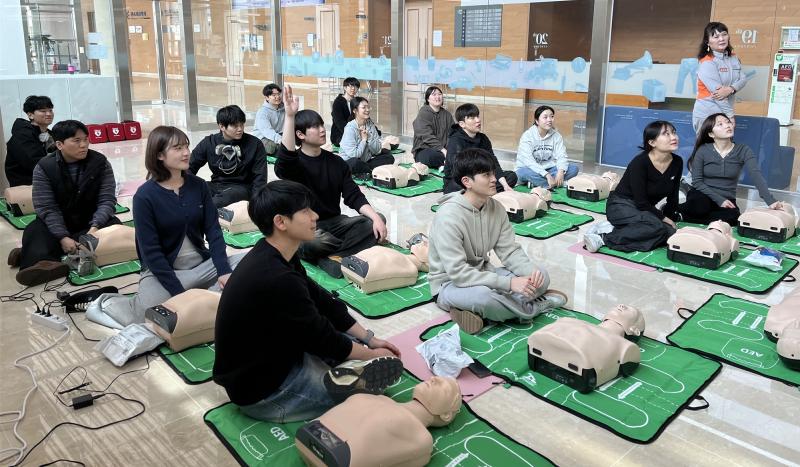
On March 24, UNIST School of Energy and Chemical Engineering conducted a joint safety training exercise in collaboration with the Ulsan Fire Headquarters, reinforcing its sustained commitment to a safety-centered research environment. Held at the central plaza between the Main Administration Building and engineering buildings, the program focused on strengthening students’ ability to respond effectively to fire and other emergency situations. The training emphasized repeated, scenario-based exercises designed to build practical skills and reinforce safety awareness. Since 2021, the school has implemented a structured safety improvement plan, placing safety at the forefront of its academic and research activities. As of the training date, it has maintained a continuous zero-accident record for 1,374 days, reflecting the impact of consistent, hands-on training and proactive risk management. The exercise was designed to mirror potential risks encountered in laboratory and everyday settings. Participants rotated through four sessions: evacuation using emergency descent devices and earthquake simulation; fire response using outdoor hydrants and extinguishers; first aid procedures, including the Heimlich maneuver and CPR, and response protocols for fires involving water-reactive substances. New elements were introduced this year to enhance the program’s realism and relevance, including a mobile earthquake simulation unit and specialized training tailored to the handling of water-reactive materials. These additions provided participants with more comprehensive exposure to emergency scenarios aligned with the School’s research environment. Students highlighted the practical value of the training. “Practicing emergency response procedures and learning to use safety equipment directly was highly instructive,” one participant noted. “It reinforced the importance of safety both in the laboratory and in daily life.” In addition to annual training exercises, the School conducts monthly safety inspections and ongoing internal safety education to maintain a comprehensive safety framework. It plans to further expand and refine these programs to support a research environment in which students and faculty can work with confidence. Hyunhyub Ko, Head of the School of Energy and Chemical Engineering, emphasized the importance of continued investment in safety education. “We will continue to provide practice-based, tailored training alongside theoretical instruction so that members of our community are prepared to respond effectively in emergency situations.”

원자력공학과, ‘원자력 안전규제라운드테이블’ 개최

Research 2026년 03월 23일 월요일

New Study Unveils Atomic Disorder Strategy to Enhance Stability and Efficiency of High-Capacity Batteries

Abstract Anionic redox in lithium-rich layered oxides (LRLOs) offers a breakthrough to higher energy density but is limited by voltage hysteresis arising from irreversible structural disorder. While enhancing transition metal–oxygen (TM-O) covalency through π-type interaction improves the reversibility of anionic processes, inevitable structural disorder during the first cycle still deteriorates TM-O hybridization. Here, we propose a counterintuitive strategy that embraces pre-synthetic cation disorder to preserve TM-O π-redox. The in-plane disordered arrangement modulates the first-cycle phase evolution, suppressing O3–O1 slab gliding and relaxing localized cationic oxidation at high voltage. This structural control maintains robust TM-O coordination and stabilized oxygen states even under high-voltage operation, yielding markedly reduced voltage hysteresis (0.31 vs 0.62 V) and exceptional long-term stability with minimal voltage decay (−0.04 mV cycle–1) and 98.0% energy retention after 160 cycles. This work establishes structural-disorder-driven phase evolution control as a practical design principle for stabilizing π-redox chemistry, achieving high-energy, structurally resilient LRLOs. Researchers at UNIST, in collaboration with the Pohang Accelerator Laboratory (PAL) and KAIST, have introduced a novel approach to stabilizing high-capacity battery materials. By intentionally inducing atomic-level disorder within lithium-rich layered oxide (LRLO) cathodes, the team has effectively minimized structural degradation and energy losses, paving the way for next-generation batteries with higher energy density and longer lifespan. Lithium-rich layered oxide (LRLO) are among the most promising cathode materials for future energy storage solutions due to their exceptional capacity, which involves not only metal ions but also oxygen participating in electrochemical reactions. However, their practical application has been hindered by structural instability during repeated charge and discharge cycles, leading to capacity fade and voltage degradation. To address this challenge, Professor Hyun-Wook Lee from the School of Energy and Chemical Engineering at UNIST, along with Dr. Young Hwa Jung from PAL and Professor Dong-Hwa Seo from KAIST, employed an innovative strategy, deliberately designing the atomic structure to be disordered. This controlled atomic disorder prevents the initial phase transition—known as slab gliding—that typically causes irreversible structural damage. Consequently, the material preserves its integrity and electrochemical performance over extended cycling. Figure 1. (Top) Schematic illustration comparing structural evolution pathways and associated TM-O covalency in ordered and pre-disordered Li/TM arrangements. (Bottom) First-principles calculations showing relative O3–O1 stacking preference during Mn migration (left) and schematic illustration of the suppressed O3→O1 slab gliding in the pre-disordered structure (right). Using advanced computational modeling based on density functional theory (DFT) and synchrotron radiation analysis at PAL, the team confirmed that the disordered structure stabilizes the bonds between transition metals and oxygen. Experimental evaluations demonstrated that these disordered cathodes exhibit a voltage difference of only 0.31V between charge and discharge during the first cycle—less than half the 0.62V observed in conventional, ordered materials—and an initial energy loss of merely 0.6%. In comparison, traditional cathodes experienced twice the voltage gap and a 25.8% energy loss. Remarkably, the disordered cathodes maintained their energy capacity with minimal voltage decay—only 0.04 mV per cycle—and retained 98% of their initial energy after 160 cycles. This exceptional stability highlights the potential of atomic-level disorder as a universal design principle for high-performance cathode materials. "By transforming what was once considered a defect—the atomic disarray—into a strategic advantage, we have opened a new pathway for enhancing battery stability," said Myeongjun Choi from UNIST, the study's first author. "This approach is versatile and can be applied to a wide range of lithium-rich layered oxides, beyond specific compositions or structures." Professor Lee added, "While lithium-rich layered oxides possess significant energy potential, their commercialization has been limited by structural issues. Our findings offer a promising route toward more durable, lightweight batteries capable of storing more energy efficiently, which could significantly impact future energy storage technologies." The findings of this research have been published online in ACS Energy Letters on February 3, 2026. This study has been supported by funding from the National Research Foundation of Korea (NRF), through projects focused on nanomaterials and advanced energy materials. Journal Reference Myeongjun Choi, Jeongwoo Seo, Min-Ho Kim, et al., "Pre-Disordering for Preserving Transition Metal–Oxygen Covalency in Lithium-Rich Layered Oxide Cathodes," ACS Energy Lett., (2026).

u
  • 등록된 글이 없습니다.

미래에너지지속가능한 화학산업의 해법을 설계하는
에너지화학공학과의 다양한 소식
을 전달드립니다.

에너지화학공학과에서 진행중인
세미나 입니다.

View More

배너존